

Sunday, June 23, 2013
Congratulations to mezzo soprano Jamie Barton.
As shared on Twitter: American mezzo soprano, Jamie Barton, has won BBC's Cardiff Singer of the World 2013.


Friday, June 21, 2013
Now Playing: Bartoli takes her turn as Bellini's Norma...

Presented in a form that is complete with the exquisite mix of vocal and instrumental colors that Bellini allegedly intended for his ‘tragic opera’, Bartoli’s Norma evokes the style and artistry of the legendary soprano Giuditta Pasta, the opera’s original heroine. The Italian superstar continues her mission to reveal lost details of expression and emotional variety in music covered by the dark varnish of later performance traditions. Norma, often portrayed as a superhuman priestess, emerges in Bartoli’s performance as a woman of flesh and blood, torn between duty and love. Bartoli's Adalgisa is Lyric Coloratura Sumi Jo - clearly cast as Bellini intended, which was to have Adalgisa portrayed by a soprano.
Decca’s studio recording of Norma employs the latest critical edition of Bellini’s score, painstakingly restored from manuscript and early printed sources. The sounds of period instruments from the composer’s time, brought to life by Orchestra La Scintilla and conductor Giovanni Antonini, underpin and blend with the timbres of a cast carefully chosen.
Well - I just wanted to let you know that this is happening presently ... courtesy of Spotify:

Tuesday, June 18, 2013
Lorin Maazel on "the Philistinism of some present day opera..."
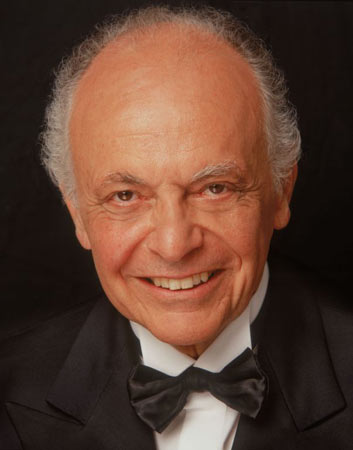
Opera Staging Madness (Part One)And, he didn't stop there. The Maestro continued:
June 14, 2013
A great number of opera lovers are becoming increasingly alienated from an art form that has nourished the spirits and minds generations of people... opera: the ultimate fusion of song and sound, of word and fancy, a visceral corporal soul language second to none in breadth and depth of thought and emotion.
At the risk of stating the obvious, of postulating the pedestrian, may I approach the subject of the staging and musical interpretation of an opera applying logic and common sense?
An opera is a Gesamtkunstwerk, i.e. a "total art work; an artistic creation, that synthesizes the elements of music, drama, spectacle, dance, language, social mores, dress, body language" and all other aspects at any given moment of the recounted story as it is set to music.
The librettist tells the story, sets it in a time period, in a cultural and social context. The composer finds the appropriate sounds, turn of phrase, thematic material to project his/her interpretation of the emotions engendered by the story. The stage director's task to flesh out in a convincing manner the essential thrust of the story as interpreted by the composer. The conductor's task is to bring to life the implications of the music in a meaningful and vibrant way.
The roles of both stage director and conductor are essentially custodial, bringing into play only those actions which heighten and make clearer the intentions of librettist and composer, actions which at every turn must respect and honor the librettist and the composer. To do otherwise is to pervert and despoil the work of masters. The egos of stage director and conductor (and his/her psychological problems) are never ever to come into play.
An opera stage is not a psychiatrist's couch.
- Lorin Maazel
Opera Staging Madness (Part Two)Speaking of Cio-Cio San ... let us not forget that the first American-born soprano to sing Cio-Cio San at La Scala was hand-chosen by Maestro Maazel.
June 16, 2013
In Part One of my comment regarding the Philistinism of some present day opera staging concepts, I wrote: 'The roles of both stage director and conductor are essentially custodial.' 'Custodial' challenges, does not restrict, the fantasy of Stage and Music Director.
Two examples: the first, Giorgio Strehler's 1980 production at La Scala of Verdi's Falstaff...end of Scene Four when a gigantic laundry basket, presumably containing Falstaff hiding and suffocating inside, is dumped over a restraining barrier into the river Thames.
In a whimsical stroke of staging genius, Giorgio had a huge wave wash over the stage three seconds after the laundry basket "hit" the river! (Never mind that at least one performance, the water flowed over the raked stage into the orchestra pit!). Sheer staging heaven, this! No need to turn Shakespeare's jocund reveler Falstaff into a retired sumo wrestler at a Caracas brothel.
The second example: Keita Asari's now legendary staging in 1986 at La Scala of Madame Butterfly. About an hour before the opera began, a Japanese country-style house could be seen being 'constructed" authentically block by block, rock garden and all. At precisely 7pm, the lights dimmed, the conductor (me at the time) walked out, bowed and gave the down beat.
The audience has been imperceptibly drawn into the timelessness of an ancient culture. Cio-Cio San's suicide was staged with a delicacy that brought tears to my eyes at every performance: no disembowelment, simply a gentle poke of her fan, which seemed to release a vermilion carpet that slowly unravelled over twenty feet of stage....her life's blood.
Now THAT'S staging genius.
No need to desecrate the refinement of a tender soul in a fragile ancient culture and given soul-life by Puccini by casting Butterfly as a hash-slinger in a San Diego diner.
- Lorin Maazel
So, where do we go from here? Never you fear, the Maestro has an idea...
Opera Staging Madness (Part Three)There are no words left ... except: Thank you, Maestro.
June 17, 2013
What can be done to safeguard an endangered art form?
If it is believed that an opera audience can be cowed into tolerating any abuse of text and music for fear of seeming to be old-fashioned, conservative, recidivist (who wants to be thought of as not with it, not up to speed, uncool), the manipulators, axe-grinders and mafiosi, given a free hand, cheerfully assault the art form.
One of the challenges for an opera house General Manager is to sell out the house. The ultimate say-so rests with the audience. If their beloved world of opera is being degraded and ridiculed (not too long ago. a stage director who publicly derided the art form of opera, staged one, with the cast dressed as monkeys), what to do? Boo? Certainly not. The singers and musicians do their best under trying circumstances and their work should be respected.
What then?
Follow the example of a gentleman who, after the First act of a Shakespeare play presented at an international festival and directed by someone who proudly said he had never read one and engaged non-professionals to "act", stood up and said in a ringing voce "George, let's go". All but thirty people left the theater.
You won't get your money back but if the General Manger reads on Facebook often enough that the Opera House he/she is managing is losing its audience, he/she will soon change course.
Another suggested action is pre-emptive in nature: if you read that a new production at your favorite opera house will be given of La Boheme set in a Nepalese fish market with the Sex Pistols in the orchestra pit conducted by Sarah Palin, don't go.
- Lorin Maazel
Friday, June 14, 2013
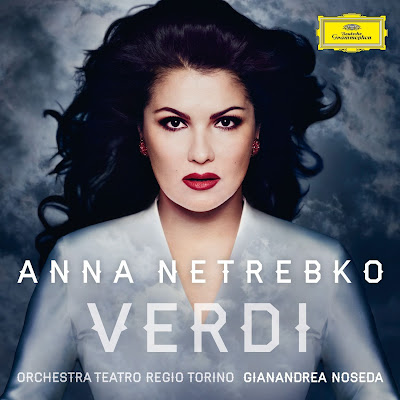
Anna Netrebko VERDI - "Don't judge an album by its..." wait, never mind.
Oh now, I know what you're thinking: opera fans have strong opinions are just aren't afraid to voice them. Well, however you may spin it, there is simply no pleasing opera fans. One minute they're hot and the other, they're cold. One minute they're up and the other, they're down. And, at this time of year it's always at its peak.
What do I mean? We are in a down-time between seasons, which means that opera fans are a little trigger-happy. They don't have their usual complaint-du-jour subjects available to beat on - so the first little target they see ... BANG!
And, there is always a go-to for their target practice. Always the usual suspect. Like: someone who is no stranger to attention from the media and fans. Yes. You guessed it: soprano Anna Netrebko.
Indeed, La Netrebko has currently created quite a firestorm with the cover of her latest album - Anna Netrebko VERDI.
From Latinospost.com:
On June 12, Deutsche Grammophon released a sneak peak of the Russian superstar's new Verdi album by presenting the album cover. However it was immediately criticized by fans and pundits for being heavily photoshopped.Yes, even La Cieca at Parterre.com and OperaChic got in on the action. I mean: you didn't expect them to sit by, did you?
One person wrote "This cover is horrible. A terrible photoshop job. Nothing looks real or natural. Anna looks plastic and terrifying. I hope it's redone."
Others threatened not to buy the CD because the artwork looked cheap. One fan noted, "What a cheap photoshop! if the album is like the cover better not to buy it". Another added, "I'll never buy this cd with that cover! Photoshop horror!"
La Cieca from the opera blog Parterre.com went as far as creating an album called "the Annas" where Netrebko's face from the cover was photoshopped into various other posters. Some of the pictures included the Russian soprano's face superimposed on posters from "Man of Steel," "V For Vendetta," "Statue of Liberty," "Star Trek: Into Darkness," and "The Adam's Family."I'd like to know this: how many of these Netrebko fans would buy an album that is comprised of relatively craptastic singing but, has a perfectly lovely and natural looking cover? These albums come to mind:
The blog Operachic also ridiculed the poster by photoshopping cats into the cover...
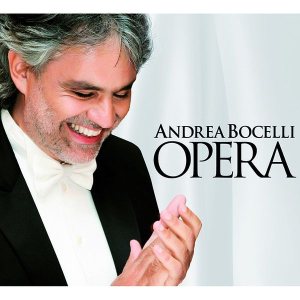
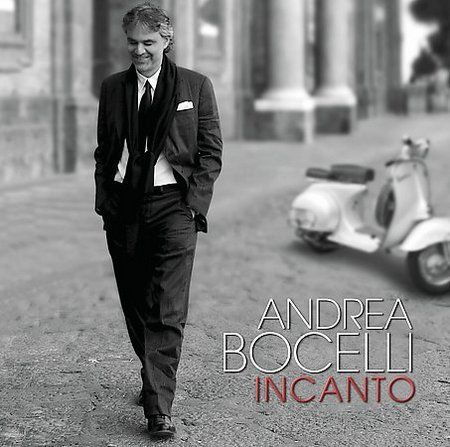
Opera fans want their favorite singers to "look the part", but then complain when they can't be heard over the orchestra or can't sing more than 2 performances in a row. Opera fans want new and innovative productions, but then complain when the "Machine" creaks and groans or the staging is too simple (or, too complex). Opera fans want to hear perfection, but complain about the contortions that a singers face may create while creating that perfection ... never mind the fact that a High Definition camera is basically up their nose.
And now we have this? People are kvetching because Anna Netrebko's latest album cover is "too photoshopped"? Listen Ladies and Gents, as I told Parterre on Twitter this morning: The album isn't live, why should the cover be?
Right? I mean, let's be honest: to get these albums to sound just right, there are countless takes and loads of fiddling with the knobs and slides on the control board. So, why the complaining about fiddling with the photography?
Settle down folks. Settle down. This isn't the first album cover that has been photoshopped. And, it wont be the last - a little softening here, some contouring there and a little blurring to mask imperfections.
In fact, here are just a few of my favorite examples of photoshopped album covers for you to enjoy:


Have a wonderful weekend...
Monday, June 10, 2013
A delivery: Massimo Giordano | Amore e Tormento
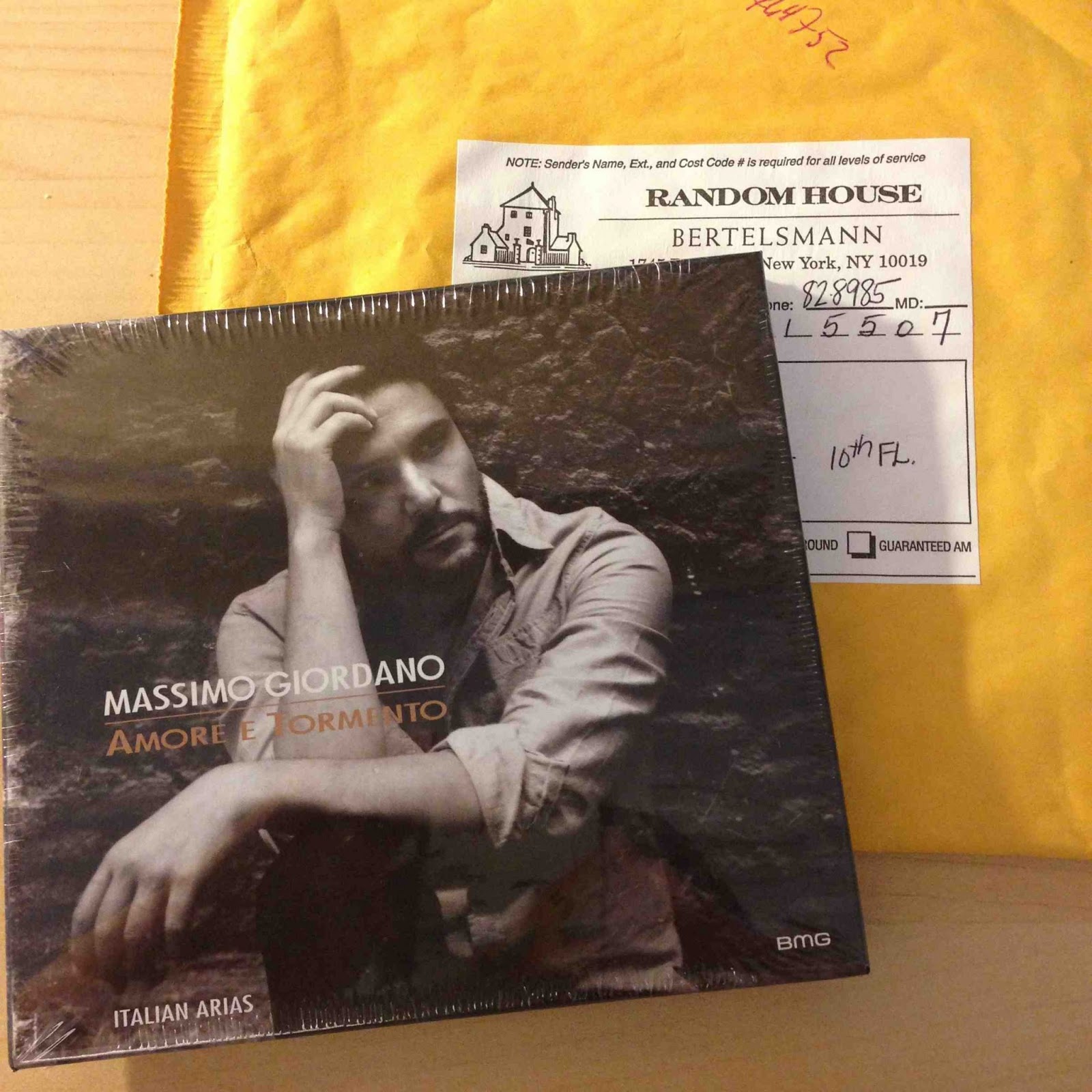
So, this just came in the mail. A review will be coming soon so, stay tuned.
Subscribe to:
Posts (Atom)

