Friday, September 27, 2013

Beginning with "Tosca" and ending with "Anna Nicole". The impending death of New York City Opera.

Break out the hankies Ladies and Gents. It appears that the powers-that-be are on the brink of pulling the life-support plug on New York City Opera. After struggling through the numerous bungled attempts at keeping its doors open, City Opera has begun spinning its obituary into the media - as a last ditch effort to guilt people into giving money.

It's not a secret: City Opera is broken. It has been broken for a long time... prior to the debacle of hiring Gerard Mortier. You remember Mortier, right? Here's from a Bloomberg.com article from 2009:
NYCO lurched toward the abyss [around 2007] when [Board chairwoman] Baker and her executive committee failed to have a general manager ready to replace Paul Kellogg, who retired with plenty of notice. 
Months later, Baker’s board hired Belgian big Gerard Mortier, who, however, already had a job running the Paris Opera for another two years. 
Crazy doesn’t begin to describe his appointment. Here’s a guy known as a big spender of public subsidies who hates traditional operas. Puccini makes him sick. 
NYCO began dying right about then.
Since Mortier left - without actually starting his job and while taking hundreds of thousands of dollars with him - the administration and board of NY City Opera has misguided the company and spent almost all of its endowment. An endowment that went from $48 million in 2008 to $5.07 million at the end of June 2012.

Soprano turned general director: Beverly Sills
Blame was placed on the board's former chairwoman, Susan Baker. Then, blame was placed on the economic downturn, even though it is widely known that Beverly Sills - diva and media darling, turned general director - ran the company for a decade, raising vast sums of money in often shaky times all while keeping City Opera's high profile intact.

But, much of those fundraising efforts have been eaten up, now. City Opera left its home at Lincoln Center. The company has cut it's staff down to 25 people and started trying to produce shows all over town. Still, the company was floundering. Almost a year ago, the New York Times reported that George Steel had a plan to save on warehouse costs. Remember this? Steel had decided to sell off - or, in some cases *trash* - the majority of productions that City Opera owns. That's right: sets, costumes and all. The company was then going to completely vacate their warehouse and Steel's idea was to store the few productions they'd like to keep ... in trucks - following the Met's lead.

Decision after decision ... George Steel and City Opera's board just kept supporting each other's ineptness. Quoted in the Washington Post, Steel says:
“It’s incredibly difficult to run an organization of this size with our eye so closely fixed on the week-to-week cash flow. It saps the energy of the staff and frankly it undermines the bigger point, which is that the company by many measures is in better financial shape than it has been in a long time,” City Opera general manager George Steel said. “We’ve been creating some of the best work we have ever done, but what we cannot do without is the capital to make our shows happen.”
"... by many measures"? WHAT measures, Mr. Steel? Nothing that I've seen. You're in the hole!!

Yesterday the board of City Opera voted to begin bankruptcy proceedings. But, as I said, the obituary is being spun as a last ditch effort to guilt people into giving to their Kickstarter campaign - and donating directly to City Opera, of course.

There's the quote from Placido Domingo:
“My early performances with New York City Opera were what really kicked off my international career, and I look back on those days with enormous pride,” Domingo said. “The company has done incredible work for so many decades, and it has played an essential role in New York’s cultural scene for millions of opera lovers. It would be an absolute tragedy for that legacy to come to an end.”
Of course, La Diva Renée (Fleming) - who in addition to singing is creative consultant to the Lyric Opera of Chicago - is quoted as well:
“I believe the city needs a smaller, more flexible chamber opera company with the highest artistic standards and innovative ideas — performing everything from baroque opera to experimental music theater,” she said. “If the Met is a luxury liner, then City Opera could be the life raft that finds a 21st-century future for the art form, and a new audience with it.”
Respectfully, La Diva Renée, If City Opera is a life raft ... then, we need to send a serious SOS because the life raft is deflating.

Even London's Covent Garden got in on the action - its director of opera, Kasper Holten, is quoted as saying:
“It would be absolutely appalling to imagine a city as great as New York not being able to have two major opera companies. If you look at London, if you look at Berlin, if you look at Moscow, if you look at Vienna, they have two opera houses, and of course New York should have two opera houses.”
And so, it appears that the company that helped launch the careers of countless singers including Beverly Sills, Placido Domingo, Samuel Ramey and Renée Fleming ... the company that at its height was producing 12 to 16 operas with about 130 performances in a season ... the company that was founded as “the people’s opera” by Mayor Fiorello LaGuardia in 1944 ... the company that gave Tosca as its first performance, will die after giving Anna Nicole as its last.

The irony is not lost - both Anna Nicole Smith and City Opera will have died in a manner that was preventable and is both tragic and senseless.

Wednesday, September 25, 2013

The Metropolitan Opera: Season begins with protests and the return of Maestro Levine.

I have to be honest with you. I have grown a little disenchanted with the opera world as of late. The same singers - many of whom are "Meh" at best - trot around in productions that are trying so hard ... so desperately ... to be fresh, edgy and on trend that they fall flat on their faces ... the productions fall flat, not the singers.

Maybe I'll start to feel differently soon?

I mean, listen: The Met Season kicked off on Monday with Eugene Onegin ... and, a little protest outside the theater as well. In advance of the Met's opening night gala performance featuring Russian conductor Valery Gergiev and soprano Anna Netrebko [pictured at right], supporters of Russian members of the LGBT community staged a protest on the steps of Lincoln Center. Many have been calling on Gergiev and Netrebko, who have been described as "longtime and vocal supporters of Vladimir Putin", to rebuke the Russian President and the bill he signed into law banning "propaganda on nontraditional sexual relationships".

As the New York Times reports:
After the lights dimmed for the Metropolitan Opera’s Russian-themed opening night gala on Monday evening, the first solo voice that rang out in the house was not of a tenor or soprano, but of a protester criticizing the recent antigay laws signed by President Vladimir V. Putin of Russia.

"Putin, end your war on Russian gays!" a man shouted in the vast auditorium, which was packed for the black-tie gala opening of Tchaikovsky’s
Eugene Onegin, before turning to two of the evening’s Russian stars: Anna Netrebko, the popular Russian diva, and Valery Gergiev, the artistic director of the Mariinsky Theater in St. Petersburg. "Anna, your silence is killing Russian gays! Valery, your silence is killing Russian gays!"

Some members of the audience tried to shush the protester, as security guards walked into the house. After a pause, the opera began.
There's nothing like a little political strife to shake the dust out of those red velvet seats...

Don't worry... I will spare you my opinions on the Gergiev, Netrebko, Russian gays situation... as I have already given it with great detail in a previous post.

So then, there is the Angela Meade / Jamie Barton Norma coming up. This puts a sparkle in my eye. Heck ... I'd even see "A Cast" of Sondra Radvanovsky and Kate Aldrich. I mean, it's Norma after all.

There's Andrea Chénier with Patricia Racette and Marcelo Álvarez. There's Die Frau ohne Schatten with Christine Goerke. There's Cosi fan Tutte with Susanna Phillips and Isabel Leonard are the sisters Fiordiligi and Dorabella, Matthew Polenzani and Rodion Pogossov are their lovers, with Danielle de Niese as the scheming Despina. An then, of course, is Nico Muhly's Met Premiere - Two Boys. Loosely inspired by real events, Two Boys lyrically driven opera explores identity and desire in the shadowy world of the Internet as a detective investigates the stabbing of one teenage boy by another ... discovering a tangled web of online intrigue.

Maestro James Levine returns to his beloved Met.
Above all this though, there is something that made me smile from ear to ear yesterday. Seeing this gem.

After a two year absence due to his a spinal injury, Maestro James Levine returned to the podium of his beloved Metropolitan Opera last night. His 2,443rd performance began with a standing ovation - a thunderous applause that lasted for a minute and nine seconds. He then turned his motorized wheelchair around on his new "maestro lift" and gave the first downbeat for the evening's Cosi fan Tutte.

When the performance was finished, the NYTimes ArtsBeat Blog reports:
Mr. Levine stayed in the pit ... unable to make it to the stage for the bows that conductors typically take with the whole cast.

The young cast was showered with applause and bravos.

Then Susanna Phillips, the soprano who sang Fiordiligi, one of the leading roles, ended her curtain call by taking a few steps toward the pit and applauding Mr. Levine. The house went wild again, standing and obscuring him from the view of many.

Then the rest of the cast returned, each of them applauding their conductor, who remained in the pit, and who is no doubt looking forward to his 2,444th performance at the Met.
Maybe my hardened heart is not so disenchanted....

Tuesday, September 24, 2013

Mrs. Huguette Clark, "Empty Mansions" and, the Estate that keeps on giving.

It's done. The estate of reclusive copper heiress Huguette Clark has been divided up and, the parties have agreed - signing the agreement in the middle of the night. The agreement was then delivered to the judge early this morning - ending the trial that was set to continue jury selection today.

NBC News' Pulitzer Prize winning investigative reporter, Bill Dedman, who stumbled upon Clark's empty Le Beau Chateau some years ago - sparking a search for the reclusive heiress, penned a truly remarkable book: Empty Mansions: The Mysterious Life of Huguette Clark and the Spending of a Great American Fortune with Clark cousin Paul Clark Newell Jr.

Remarkable? Please. Empty Mansions is on another level. If you've been living under a rock and haven't been in this space, I wrote about the book not too long ago.

Anyway, as Dedman reports today at NBCNews.com:
A deal has been reached to divide up the $300 million estate of the reclusive heiress Huguette Clark, a shy artist who lived her last 20 years in New York hospitals while her palatial homes sat empty.

The deal gives $34.5 million to Clark's relatives, although her will stated emphatically that they should receive nothing. These relatives are the great-grandchildren and great-great-grandchildren of Huguette's father from his first marriage. Her father — W.A. Clark, the copper miner and former U.S. senator from Montana who also founded Las Vegas — left equal shares of his fortune to all of his surviving children: Huguette and four of her half-siblings.

The settlement sets up an arts foundation controlling the Clark family's $85 million California summer home at Santa Barbara. That charity is the largest beneficiary of the will, as Clark directed, but with a twist: In the settlement, the foundation isn't set up in California but in New York, with the New York attorney general forming the first board of directors. Seats are reserved for the Santa Barbara community, and Clark relatives also get a seat.

After Huguette Clark died in 2011 at age 104, 19 relatives challenged her will, claiming she was mentally ill and had been defrauded by her nurse, attorney and accountant. No one was charged with any crime after an investigation by the district attorney's office, but enough questions were raised that the case is being settled before the jury trial, which could have lasted six to eight weeks. The relatives, who last saw her in 1957 and most of whom never met Clark, will take home the full $34.5 million, as the estate will pay the relatives' taxes and $11.5 million in legal fees. Altogether, about $25 million in legal fees are included in the settlement.

The big loser in the settlement is Clark's nurse and companion, Hadassah Peri, who was the daytime private-duty registered nurse for 20 years while Clark lived in Doctors Hospital and then Beth Israel Medical Center. Peri had received $31 million in gifts while Clark lived, and was in line for a share of the will, approximately $30 million before taxes. (Read the will.) But under the settlement the nurse receives nothing from the will and has to pay back $5 million to Clark's estate.
The sticking point right now is the Bellosguardo Foundation. There has been a foundation already established in California - but Attorney General Schneiderman has said that the foundation will be based here in New York. That is to say that it would be a New York charity, but would have it's offices in Santa Barbara, CA.

Again, from Dedman's reporting:
The legal quandary is this: The will set up the foundation, but until the will is determined to be valid by a judge or jury, does the foundation exist, and can it be represented in court? The law on this question is thin. Judge Anderson ruled after a secret hearing that the California foundation can't be represented. The California group filed an appeal on Monday.

That question could ultimately end up in federal court. If the New York appeals court doesn't allow the California group to participate in the settlement, the issue could be revisited in a California court when the New York Bellosguardo Foundation tries to take control of the property. That conflict between states could ultimately become a federal case.

In addition to the Clark summer home, valued conservatively at $85 million [and the art contained therein], the new Bellosguardo Foundation would receive Clark's $1.7 million doll collection, which had been left to the nurse, and $4.5 million in cash.
But then, there are the taxes. Mrs. Clark was a generous woman - to say the least. However, she owed quite a large amount of Gift Taxes to the IRS ... some $82M. The estate has asked the IRS to lower the fees on the back taxes. If the IRS insists on claiming ever dollar owed, it will eat into the amount of money given to the Bellosguardo Foundation - which could ultimately force the foundation to sell off the mansion for which it is named.

As it stands now, the Attorney General's spokeswoman, Melissa Grace, released this statement:
"After more than two years of litigation, Attorney General Schneiderman's Charities Bureau has brokered a settlement that will ensure that Huguette Clark's charitable wishes are fulfilled, allowing the bulk of Mrs. Clark's wealth to go to charity instead of being wasted on legal costs. The arts foundation that Mrs. Clark envisioned will be created, with the gracious and historic Bellosguardo mansion in Santa Barbara, California, at its center."
This makes me smile.

Friday, September 20, 2013

Bill Dedman and Paul Clark Newell Jr. open the doors to Huguette Clark's "Empty Mansions".

If you have the slightest interest in stories of old-school politics, gigantic fortunes, unbounded generosity and unceasing devotion - all sprinkled with a smattering of fascinating mystery then, Empty Mansions: The Mysterious Life of Huguette Clark and the Spending of a Great American Fortune  must be your next read. And, I mean MUST. Do not pass go. Do not collect $200. Go straight to your closest bookstore and get your copy today.

I mean it. Stop what you're doing and ... you don't even have to leave your desk. I'll make it easy for you: order it now!

If you're not a reader, then you have to grab the audio book. You will not be sorry because included in the audio book are phone conversations and messages that feature the sweet little high-pitched voice of Mrs. Huguette Clark. I mean, come on. If that doesn't suck you in...

For those who have just come to this space ... I have been covering Huguette Clark for quite some time. I am absolutely fascinated with the story of the Copper Heiress, who died in 2011. Just shy of her 105th birthday, Clark died surrounded by many of her beloved dolls and the nurse that had been hired to care for her at Beth Israel Hospital.

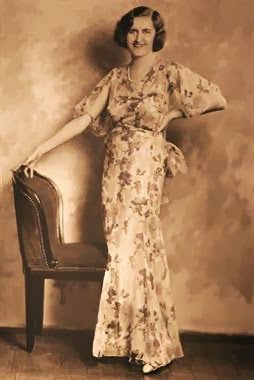
Huguette Clark was only 19 years old when her father - that would be copper baron and disgraced former Senator William Andrews Clark - died. At that time, she and her mother moved to the penthouse at 907 Fifth Avenue. In addition to living with her mother, Huguette Clark was well taken care of, financially speaking. She received an allowance of $7,500 a month (that would be about $100,000 a month in today's dollars), and when she reached 21 she inherited one-fifth of her father's estate. This was an even split with his children from his first marriage. The entire estate was estimated at up to $300 million, or about $3.6 billion in today's dollars.

During her life, Huguette Clark managed to take the roughly $60 million that she inherited and increased it to include at the time of her death, $300 million worth of priceless works of art, a massive doll collection comprised of both French and Japanese dolls, numerous musical instruments and Real Estate holdings that include two estates and two apartments at 907 Fifth Avenue in New York and, cash-on-hand.

Incredibly written by co-authors, Pulitzer Prize–winning journalist Bill Dedman and Huguette Clark’s cousin, Paul Clark Newell, Jr., this story truly opens the doors to the Empty Mansions that were once filled with music, art and life. We are treated to a glimpse into the world of one of the families that helped shape our country's artistic, political and physical heritage ... copper, railroads, a little town called Las Vegas - all tie back to W.A. Clark and his family.

In Empty Mansions we also meet a mysterious heiress who kept herself away from the outside world for decades - only speaking to people through closed doors or when she would call them on the telephone. She never gave out her phone number so people could call her. She spent her days quietly painting, having elaborate doll houses and miniature Japanese castles built while she toiled over every detail. She collected expensive dolls and fine art but, what's more is that she showered those closest and most loyal to her with a generosity second-to-none. In fact, she kept various staff members working even after she moved into Beth Israel Hospital for a stay that lasted nearly 2 decades ... well, let's face it: someone had to maintain the Fifth Avenue apartments, mansion in Connecticut and the mansion and grounds of Bellosguardo in Santa Barbara. Right?

You think the story ends with Huguette Clark's death? Think again! Make sure to follow Bill Dedman on Twitter. It appears that he is keeping us up to date on the trial that has commenced to settle the contested Last Will and Testament of the copper heiress. The plot just keeps getting thicker. Will her wishes, as laid out in her Will, be carried out? Or, will the Estate be sold off and divided between the large number of extend family - whom Mrs. Clark specifically left out of her Will. You can also, follow the proceedings on the Huguette Clark page at NBCNews.com:

The saga continues ...

BUT, to wet your appetite for Empty Mansions ... here is a video via that same Huguette Clark page at NBCNews.com:

Visit NBCNews.com for breaking news, world news, and news about the economy

Monday, September 9, 2013

More Woes for New York City Opera.

For the last few years, many have been asking for help ... help to save New York City Opera from itself.

After all, there was the ill-advised and executed Mortier debacle. There have been major shifts to City Opera's production and casting decisions. There was the ridiculous decision to leave Lincoln Center and become a rootless, strolling minstrel group. There was the decision to "sell off" the historic productions that made City Opera what it was.

And now, New York City Opera... the "people's opera"... has resorted to Kickstarter in order to try to raise some money. Additionally, there have been threats made regarding the future of City Opera production schedules. From the New York Times:
New York City Opera, which was founded 70 years ago to bring opera to the masses, will be forced to cancel most of its current season and all of its next season if it fails to raise $20 million by year’s end, company officials say.

“The company’s been living on the edge and hand-to-mouth for a number of years, and we’ve gotten through our own share of financial troubles,” George Steel, the company’s general manager and artistic director, said in a telephone interview last week. “We’ve had balanced budgets for the last two years, and we’ve been doing, I think, incredible work onstage. But we can’t forge ahead without a significant infusion of capital.”

The company’s $20 million fund-raising goal is nearly twice the $11.5 million it reported raising last year. And it is more than the troupe was able to raise in better times, before the recession, and before its squeezed finances forced it to abandon its old home in Lincoln Center, where it used to give more than 100 performances a season. The company has led a nomadic existence since leaving Lincoln Center in 2011, performing fewer than 20 times a year, often to critical praise, at theaters around the city.

The company is still preparing to go ahead next week with the highly anticipated American premiere of Mark-Anthony Turnage’s opera
Anna Nicole, a coproduction with the Brooklyn Academy of Music.

But it will cancel the other productions it has planned for this season — Johann Christian Bach’s
Endimione Bartok’s Bluebeard’s Castle and Mozart’s Marriage of Figaro — if it cannot raise $7 million by Sept. 30, Mr. Steel said.
For 4 years now, George Steel has taken the "cooking pasta" approach to running New York City Opera ... while the pasta is cooking, he keeps pulling pieces out of the boiling water and throwing them against the wall in hopes that, at some point, something will stick.

I mean: now, the company will seek to raise $1 million of the $7 million it needs to raise by the end of the month through an online Kickstarter campaign. As of this moment: 314 people have pledged $28,005 - and, there are 21 days to go in the online campaign (that's an average pledge of $89.18). If, as per Kickstarter's rules, they do not completely fund their goal, they get $0.

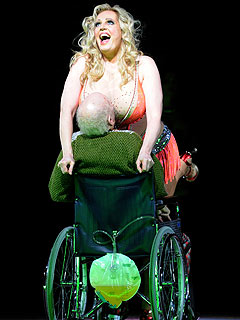
Eva-Maria Westbroek as Anna Nicole
Now, according to the Wall Street Journal, this shortfall isn't entirely City Opera's fault:
[The] problems came to a head two weeks ago, after some pledges expected over the summer fell through and with City Opera's much-anticipated U.S. premiere of Anna Nicole, based on the life and death of tabloid star Anna Nicole Smith, fast approaching. Opening Sept. 17, Anna Nicole is a co-production with the Brooklyn Academy of Music. City Opera's share of the cost is $1.3 million.

Over those two weeks, the company scrambled to assemble the cash it needed to pay for rehearsals and other production costs, raising $1.1 million by asking board members to write checks and calling in pledges early from other donors, officials said.

But after the two-week run at BAM, City Opera once again will be out of cash, Mr. Steel said.
This has many inside (and, outside) the operatic community asking: "Why? Why should I give to a fledgling company that clearly cannot manage its money wisely and continually finds itself operating so close to the financial cliff?"

In fact, Gawker even went a step further saying: Do Not Give a Dollar to the Opera:
In return for $20 million in charitable donations, the New York City Opera will produce three operas this season, and another season of operas next year.

Could that same $20 million in charitable donations be better spent elsewhere? Well, if you believe that saving human lives is a better use of money than producing operas, then yes. That money could purchase nearly seven million anti-malaria nets through the Against Malaria Foundation, which is rated as the world's most effective charity by the ethical philosopher Peter Singer. Singer's group estimates that a human life is saved for every $1,865 donated to the AMF. So, for the cost of producing one and a half seasons of opera in New York City, more than 10,000 deaths in developing countries could be prevented.

Perhaps the charitable donors who might give money to the New York City Opera are only interested in causes here in New York City. In that case, consider the fact that there are currently more than 50,000 homeless people in our city. A donation of $20 million to, for example, the Coalition for the Homeless could go a long way towards addressing the needs of those in crisis.

There are many things in this world that are all well and good, but that are not the best uses of charitable donations, which are a precious and limited resource. When charitable resources are limited, they should be put towards the most pressing needs. Saving human lives or helping the homeless are just two examples of needs that are more pressing than producing one and a half seasons of opera in New York City.

Opera, as an art form, will survive. The child who gets malaria will not.
Listen, I get the point. No one wants to give money to an organization that cannot manage it. But, judging people who give money to the arts as "less than" because they didn't give their money to save childhood Malaria, is not only completely overstating the point, but it is also neglecting to see the significance of the arts and opera in our country's landscape.

What about the zillions of dollars that corporations give to sports teams and their arenas? Do you judge them? What about the zillions of dollars that people give to gun lobbying firms like the NRA? Imagine the children in our own country who could be helped for THOSE dollars.

People give money to whomever they feel will A.) Help them (ie: the gun lobby helping those who are against gun restriction). or B.) Make them feel good about themselves via the cause to which their money is going (ie: the arts, PETA, UNICEF and the like).

Anyway, Gawker aside... I think it's time for someone - most likely, the board - to take a good, hard, long-since-overdue look at the state of City Opera because clearly, what's been happening in recent years isn't working. I know Mr. Steel has stated that the company has "worked through" it's financial woes, has balanced budgets and tra-la-la. But, clearly something is amiss considering - after all of the cost cutting, laying off of workers, decreasing contracts, moving etc. etc. etc. - City Opera is still so IN THE HOLE, or close to the hole, that they are threatening to shutter future productions.
Related Posts Plugin for WordPress, Blogger...