Tuesday, February 26, 2013

Black History Month: Soprano Camilla Williams

Ms. Camilla Williams is not a famous, household name - but, what she is known for is being the first African American woman to have received a contract with a major American opera company.

Born in 1919 in Danville, Virginia. The daughter of a chauffeur and his wife, Williams was introduced to classical music at an early age. When a Welsh voice teacher came to the segregated city to teach at a school for white girls, a young Williams took lessons privately from the teacher who was relegated to teaching the "colored" girls in a private home.

After graduating from Virginia State College, Williams was teaching third grade and music in Danville schools when she was offered a scholarship from the Philadelphia alumni association of her alma mater for vocal training in Philadelphia. Shortly thereafter, she began her studies under Marion Szekely-Freschl and and also began working as an usher in a theater.

Remarkably, just four years later on May 15, 1946, Camilla Williams debuted with New York City Opera - singing what would become her signature role, Cio-Cio-San, in Madama Butterfly. Her debut was the first step on a path that would eventually carry singers like Grace Bumbry, Jessye Norman and Kathleen Battle to the operatic stage. According to a New York Times review of the performance, she displayed "a vividness and subtlety unmatched by any other artist who has assayed the part here in many a year". She also appeared with City Opera as Nedda, in Pagliacci, Mimi in La Boheme and in 1948 she sang Aida.

Williams teaching at Indiana Univ. - 1985
Her trailblazing didn't stop there - in 1954, Williams broke yet another color barrier when she became the first African American to sing a major role with the Vienna State Opera, again singing Cio-Cio-San. In 1963, she sang the National Anthem at the White House and, that same year, sang it before 200,000 people prior to Martin Luther King's legendary "I Have a Dream" speech at the Lincoln Memorial. She also sang at King's Nobel Peace Prize ceremony the following year. Her pioneering efforts as an African-American opera singer were profiled in the 2000 PBS documentary Aida's Brothers and Sisters: Black Voices in Opera. She was also profiled in the 2006 PBS Documentary The Mystery of Love.

She continued to sing throughout the United States and Europe with some of the world's leading opera companies until her retirement from the stage in 1971. Williams then went on to teach voice at Brooklyn College, Bronx College and Queens College before arriving at Indiana University. She remained a professor of voice at the IU Jacobs School of Music from 1977-97 and became a professor emeritus of voice upon her retirement.

In January of 2012, Williams died of complications from cancer at her home in Bloomington, Indiana. She was 93.

Wednesday, February 13, 2013

"They deserve a vote ..."

So... yesterday, I was wondering what President Obama would say in his State of the Union about our epidemic of gun violence in this country - as well as, the need for REAL gun safety legislation.

It's obvious that we would say something, given his administration's efforts to keep the issue in the media and at the forefront of all of our minds. But, I don't think too many people thought that his remarks on gun violence would bring the emotional response that it did from so many.

Clearly, it was the emotional point of the evening:


They deserve a vote ...

Tuesday, February 12, 2013

The State of the Union - why this time must be different.

Constitution of the United States
Section. 3.
He shall from time to time give to the Congress Information of the State of the Union, and recommend to their Consideration such Measures as he shall judge necessary and expedient ...
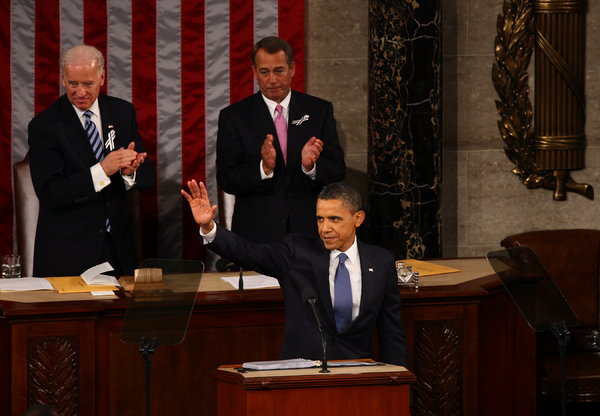
"He shall from time to time..." Well, tonight's the night. President Obama gives the first State of the Union speech of his second term. Given what has transpired over the last few months, I am absolutely on pins and needles with anticipation about what he will say.

And more importantly, how he says it.

It is evident that the Obama Administration has been beating the drum for gun safety legislation ever since the Newtown massacre happened on December 14th. And, they're smart to continue to beat that drum. In the past, we Americans hear about a shooting in a movie theater, or a place of worship - we even watch in horror as one of our public servants is nearly assassinated - and, we shout our disdain and pound our fists in outright anger over the massive gun violence sweeping across our country only to let that furor and rancor die out. Days turn into weeks, weeks turn into months and we move on. Then, when another gun related tragedy strikes, we simply lather, rinse and repeat.

This time had to be different. This time, the lives of innocent children ... children younger than my 8 year-old ... were savagely cut short. Mothers and fathers had to bury their babies. In fact, in one such instance, it was reported that the mother of one of the slain children asked Gov. Dannel P. Malloy to view her son's body. From the Stamford Advocate:
Veronique Pozner wanted Malloy to see what the bullets did to Noah, who was barely 6, the youngest Newtown victim.

In the casket, Noah's eyes were closed, his long lashes resting on his cheeks, Naomi Zeveloff reported in the Forward. The bottom half of his face was covered by a cloth.

"... there was no mouth left," Veronique Pozner told the newspaper. "His jaw was blown away."

In Noah's right hand she placed a clear stone with a white angel inside. She wanted to place one in his left hand, too, but that hand was gone.

Noah was shot 11 times.
Horror. Absolute, unequivocal horror.

Here's the bottom line for me: Protecting life is protecting life. It's not a game of pick and choose ... advocating for the protection of life in one instance and letting it slide in another.

Yes, the Obama Administration sees that it must continued to keep gun safety on the front burner, and so do most Americans. This time must be different. We need to continue to beat the drum for gun safety legislation. REAL gun safety legislation.

So, that being said ... what should we look for in tonight's State of the Union?

Politico says there are 5 things to watch for - and, one of them has to do with the subject at hand.

From Politico:
How far does [Obama] go on guns?

The big question is not whether Obama will mention his gun push but which part of it he will emphasize — and how much the issue will dominate the night.

There has been little support beyond Obama and Vice President Joe Biden for a proposed assault weapons ban, and virtually all of the White House’s gun efforts have been focused on universal background checks — which has yet to receive much support from Republicans in the House or Senate.

Gun control is part of a responsibility to protect the nation’s children, Obama says, and on Tuesday he’ll call for congressional action, boasting of bipartisan agreements in place on background checks and new anti-trafficking laws.

Obama will travel later in the week to his hometown of Chicago, which has seen a recent spike in gun violence. But on Tuesday night, he’ll look out at many victims of gun violence and their family members — the administration and its gun control allies are bringing 120 of them to the White House on Tuesday for a briefing and dozens of members of Congress gave their single guest ticket to the victims of gun violence and their families to watch from the gallery.

Former Rep. Gabrielle Giffords (D-Ariz.) and her husband, Mark Kelly, will be in the audience. The parents of Hadiya Pendleton, the 15-year-old Chicago girl shot and killed weeks after performing at Obama’s Inauguration, will sit with first lady Michelle Obama.

“When he talks about guns, he’s going to have enormous support in the gallery and in the country,” said Mark Glaze, the director of New York City Mayor Michael Bloomberg’s Mayors Against Illegal Guns. “Ultimately, we think he’ll have it in the Congress too.”
So, let's watch tonight. Then, we'll actively move forward because this time must be different. It just has to be. For the protection of innocent lives.

As a side note: after the State of the Union tonight, be on the look out for a new ad. The ad comes from Americans for Responsible Solutions, the organization founded by former Rep. Gabby Giffords (D-AZ) and her husband, retired astronaut Mark Kelly. At a six-figure buy, the ad will air on the major cable news networks (and, Fox News too). It will also air in Washington, DC and in the cities represented by congressional leaders: San Francisco (Nancy Pelosi); Cincinnati, OH (John Boehner); Louisville, KY (Mitch McConnell); and Las Vegas, NV (Harry Reid).

Ok, ok - I know. You can't wait until tonight. Well, neither could I:

Friday, February 8, 2013

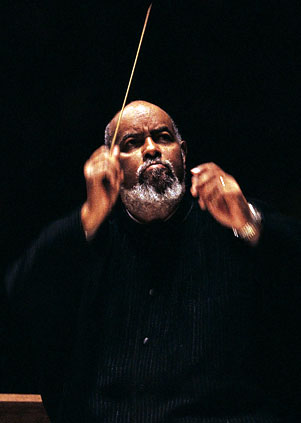
In Memoriam: Maestro James DePreist 1936-2013

One of our country's finest conductors, James DePreist, has died - the Director Emeritus of Conducting and Orchestral Studies at The Juilliard School and Laureate Music Director of the Oregon Symphony was 76 years old.

James DePreist was born in Philadelphia to James and Ethel Anderson DePreist and was the nephew of legendary contralto Marian Anderson.

He studied composition with Vincent Persichetti at the Philadelphia Conservatory of Music and earned bachelor's and master's degrees from the University of Pennsylvania. In 1962, while on a State Department tour in Bangkok, he contracted polio but recovered sufficiently to win a first prize in the Dimitri Mitropoulous International Conducting Competition. He was selected by Leonard Bernstein to be an assistant conductor of the New York Philharmonic for the 1965-66 season. DePreist made his highly acclaimed European debut with the Rotterdam Philharmonic in 1969. In 1971 Antal Dorati chose him to become his Associate Conductor with the National Symphony in Washington, D.C.

For more than three decades Maestro DePreist served as Music Director of various institutions such as Orchestre Symphonique de Québec, the Malmö Symphony Orchestra in Sweden, Monte-Carlo Philharmonic Orchestra and the Oregon Symphony. He was currently serving as Artistic Advisor to the Pasadena Symphony.

As a guest conductor Maestro DePreist has appeared with every major North American orchestra, and internationally he has conducted in Amsterdam, Berlin, Budapest, Copenhagen, Helsinki, Manchester, Melbourne, Montreal, Munich, Prague, Rome, Rotterdam, Seoul, Stockholm, Stuttgart, Sydney, Tel Aviv, Tokyo, Toronto and Vienna. He made his London debut with the London Symphony at the Barbican in April 2005.

With more than 50 recordings to his credit, James DePreist has a substantial presence in the recording arena. His varied recorded repertoire includes a celebrated Shostakovich series with the Helsinki Philharmonic and 15 recordings with the Oregon Symphony which have helped establish that orchestra as one of America's finest.

James DePreist was awarded 14 honorary doctorates and was the author of two books of poetry - about which Maya Angelou said, "His poetry has the tautness of a perfectly pitched viola and much of its resonance".

He was an elected fellow of the American Academy of Arts and Sciences and the Royal Swedish Academy of Music, and was a recipient of the Insignia of Commander of the Order of the Lion of Finland, the Medal of the City of Quebec and was an Officer of the Order of Cultural Merit of Monaco.

In 2005 President George W. Bush presented James DePreist with the National Medal of Arts, our nation's highest honor for artistic excellence.

Wednesday, February 6, 2013

Filed under FYI: Philip Glass' "The Perfect American"

Philip Glass' new opera, The Perfect American, had it's world premiere at the Teatro Real de Madrid and was streamed live today. In it, Glass tells the story of the final months in the life of a 20th-century character of huge cultural influence, Walt Disney.

The premiere cast of The Perfect American included: Christopher Purves as Walt Disney, David Pittsinger as Walt's brother Roy, Marie McLaughlin as Lillian Disney, Sarah Tynan and Nazan Fikret as his Disney's daughters Sharon and Diane, Rosie Lomas as Lucy / Josh and Zachary James as Disney's famous animatronic Abraham Lincoln.

So ... FYI:

Tuesday, February 5, 2013

Black History Month: Soprano Jessye Norman

Soprano, Jessye Norman on Achievement.


And for a bonus ... Jessye Norman with Kathleen Battle are scandalized...

Friday, February 1, 2013

Black History Month: Maestro Henry Lewis

I first ran this post in February of 2010. But, given that today kicks off Black History Month, I thought I would revisit it because I don't think this particular trailblazer of our industry gets enough credit for the racial barriers that he met and subsequently tackled.

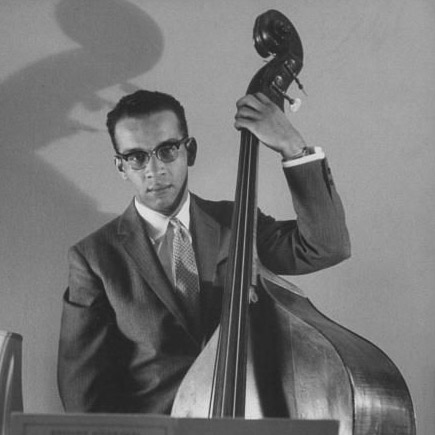
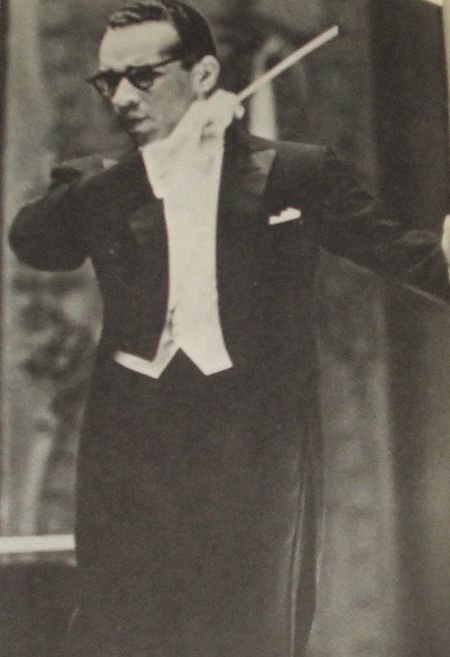
You see, he not only became the first African American instrumentalist in a major orchestra, but at the time, was also the youngest - being just 16 years old. This gentleman broke racial barriers as a musician, and then went on to do the same as a conductor. He was the first African American to head a major symphony as Music Director and was also the first African American to conduct at the Metropolitan Opera.

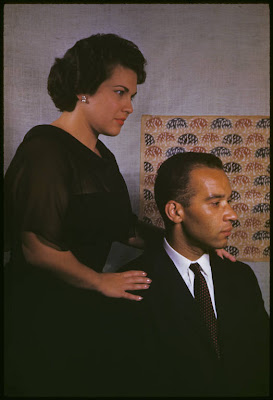
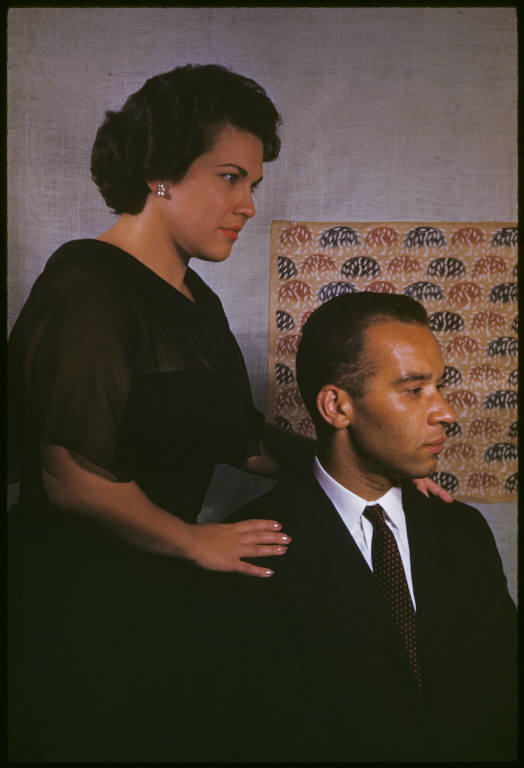
This musician and conductor was, of course, Henry Lewis.Unfortunately, Henry Lewis seems to be known more for being the ex-husband of mezzo soprano Marilyn Horne than for his own accomplishments [Pictured right, in 1961]. In fact, if you do a Google Images search for Henry Lewis, Conductor Henry Lewis, Musician Henry Lewis or any number of other versions, you'd be hard pressed to find an imagine in which Lewis is without Horne. But, Marilyn Horne always gives Lewis credit where credit is due. In her autobiography, Marilyn Horne: My Life, Ms. Horne says:
Henry Lewis was my prophet and my teacher and my right hand ... I certainly would have had a career without Henry, but it was he who really led me into the paths of bel canto. He labored and sweated and did everything he could to teach me the style.
Also, it was Lewis who put a young Marilyn Horne up to auditioning to be the singing voice for Dorothy Dandridge in the movie version of a musical based on Bizet's opera Carmen; Carmen Jones. Horne got the part and dubbed for Dandridge.

Henry Jay Lewis was born on Oct. 16, 1932, in Los Angeles. He was the only child of Henry J. Lewis, an automobile dealer, and Mary Josephine Lewis, a registered nurse. His mother set him down at the piano when he was only 5 years old, much to displeasure of his father who wanted Lewis to become a "respectable, professional man - not a musician". [NY Times]

When Lewis was in Junior High School, his teacher offered lessons on the double bass. Lewis made the decision to master the double bass because double bass players were rare. He also studied other instruments and voice. But, it was his double bass playing that got him a post as instrumentalist with the Los Angeles Philharmonic when he was just 16 years old - the youngest person to do so, as well as the first African American.
In addition to his post with the LA Phil., his talent and prowess on the double bass won him a scholarship to the University of Southern California. He never graduated, but took more than enough credits to have done so. Later in life, Lewis made up for his lack of degrees by receiving many honorary degrees from several institutions.

Lewis served in the U.S. Army from 1954-57. He not only served with the Stuttgart, Germany-based Seventh Army, but was also the conductor of its Symphony Orchestra.

In 1960, Henry Lewis married Marilyn Horne. In her autobiography, Ms. Horne wrote that she received many warnings from friends and relatives alike about problems that would arise from an interracial marriage in the '60s. She writes about a particularly difficult comment which came from her mother:
'What do you want to marry him for?' Mother said shortly. 'Why can't you just live with him? Be his mistress, for God's sake, not his wife!'
Henry Lewis gained national recognition for the first time in 1961 when he was appointed to the post of assistant conductor of the Los Angeles Philharmonic under Zubin Mehta. In 1968 he became the conductor and musical director of the New Jersey Symphony and was the first African-American to lead a major symphony orchestra. Lewis transformed the small community ensemble with an average yearly budget of $75,000 into a nationally recognized orchestra with a budget well into the millions.

In 1972, Henry Lewis spent his 40th birthday on the podium of the Metropolitan Opera, becoming the first African American to conduct there. He joined forces with the MET again in 1975 to conduct their tour of Japan.

After a rocky relationship with the New Jersey Symphony, Lewis resigned from his post as Music Director in 1976. According to the New York Times, Mr. Lewis said he had imposed stern but reasonable demands on the orchestra's members, but they called him tyrannical. In a three-week strike that preceded his resignation, its is said that the orchestra's negotiating committee actually sought a contract clause stipulating that Lewis refrain from frowning at rehearsals and performances.

Seriously? A conductor not frowning at rehearsals and performances? They might as well have asked him not to wave his arms.

Henry Lewis continued to conducting after leaving his post at New Jersey, though. He not only served as music director of the Opera-Music Theater Institute of New Jersey but also as principal conductor of the Netherlands Radio Orchestra. He also continued touring Europe and America as a frequent guest conductor for opera companies and symphony orchestras.

During their marriage, Marilyn Horne and Henry Lewis - whose daughter Angela was born in 1965 - often appeared together and were the subject of magazine articles that showed them as happy in their music and their marriage. Unfortunately, their marriage ended in divorce in 1979. But, they remained colleagues and more importantly, close friends.

A 1984 article in PEOPLE Magazine put it this way:
... the figure of another man broods over Horne's life: her ex-husband, the conductor Henry Lewis. When Horne gave her American Song-book concert at Lincoln Center, [Horne's companion Nicola Zaccaria] was in Greece. It was Lewis, 51, and their daughter, Angela, who waited backstage with champagne to toast the diva. They speak of each other with a plangent affection. "She's a very, very important person in my life," he says. "There's a niche for her within my heart." Horne echoes him: "There's a deep friendship and a very deep love that will always be there."
Just 12 years later - in 1996 - after battling Lung Cancer, Henry Lewis died at his home in Manhattan of a heart attack. He was only 63 years old.

Lewis' legacy is immeasurable. He contributed greatly to helping build the technical and musical foundation of one of the greatest singers of all time - and also paved the way for African American musicians and conductors alike.

Related Posts Plugin for WordPress, Blogger...