Showing posts with label In Memoriam. Show all posts

Wednesday, November 22, 2017

In Memoriam: Dmitri Hvorostovsky 1962-2017

The famously silver maned Russian baritone Dmitri Hvorostovsky died this morning in London of complications from brain cancer. He was 55 years old.

Hvorostovsky has been one of the most widely respected singers in the opera world since he burst onto the stage in 1989. It was at the Cardiff Singer of the World competition that Hvorostovsky sealed his stardom — beating out fellow baritone Bryn Terfel. Russian mezzo-soprano Irina Arkhipova, encouraged him to enter the Cardiff contest. It has been noted that after the performance at Cardiff, John Shirley-Quirk, the acclaimed bass-baritone, was said to have said, “Hvorostovsky looks like Nureyev and sings like God”.

Described by Elle magazine as the "Elvis of opera", Hvorostovsky became known for his roles in Verdi operas, including as Germont in La Traviata, the hunchbacked jester in Rigoletto, the Count di Luna in Il Trovatore, Rodrigo in Don Carlo and the title character of Simon Boccanegra. But, it was his portrayal of the title character in Tchaikovsky's Eugene Onegin that became Hvorostovky's calling card.


In June 2015, the baritone announced that he was suffering from a brain tumor. 6 months later, Hvorostovsky shared with the world that he would be withdrawing from all future staged operas to focus on medical treatments - leaving some very big shoes to fill. However, he surprised the audience at the Metropolitan Opera Gala in May when he graced the stage for a poignant performance of the "Cortigiani vil razza dannata" from Verdi's Rigoletto.


Hvorostovsky is survived by his wife, Florence, and their two children, 14-year-old Maxim and 10-year-old Nina; his twin children, 21-year-old Alexandra and Daniel, from a previous marriage; and his parents, Alexander and Lyudmila.

Wednesday, September 6, 2017

Has It *Really* Been 10 Years?

Remember 10 years ago when Facebook was barely a thing and Twitter wasn't a thing at all. We relied on the "CNN Alert Widget" to get our breaking news, right? If something major happened, it would pop up in the lower part of your computer screen with the alert.

Now, I say "something major" because anymore, a panda at the National Zoo could pass gas and we'd get a breaking news alert. But, I digress...

10 years ago, today, I was sitting at my computer and a "CNN Alert" popped up on the screen:
Famed Tenor Luciano Pavarotti dead at 71.
I literally gasped and said, "Oh my god!"

Now, I can confidently say that I can count on one hand the number of people whom I know who had the same reaction. But, you see, to us in the opera world, Pavarotti was the biggest star in our stratosphere - both figuratively and literally.

I was in high school when Pavarotti teamed up with Jose Carreras and Placido Domingo for the Three Tenors Concert. I remember watching it on PBS with my grandmother - awestruck at the sound. I had heard opera before but, this was accessible, fun and exciting. This was "rock star" opera: I mean, stadiums packed with throngs of cheering fans is pretty much "rock star" status.

As I moved into my own operatic study and career, he was always the sound that we singers listened to. His technique was impeccable - although, many of us were divided on his use of "shadow vowels". Like at the end of "Nessun Dorma" when, instead of singing "All'alba vincerò! Vincerò! Vincerò!", Pavarotti would sing "All'alba vincerò! Vinahcerò! Vin-aah-cerò!". Here... see for yourself. I always dismissed it as one of those funky things we singers adopt from time to time. But, I found out years later in my own study that there was a reason for it.

After years of listening, watching and listening somemore... the voice - the personality - the smile ... all of it gone? Taken by cancer? At a time of his life when other singers have started to teach and pass on their vast knowledge to the next generation? I was in denial and disbelief.

From CNN:
Famed tenor Luciano Pavarotti, who died on Thursday at the age of 71, was one of opera's most adaptable and ebullient performers, appearing on stage with singers as varied as Dame Joan Sutherland, U2's Bono and Liza Minnelli.

Much as the star power of Rudolf Nureyev and Mikhail Baryshnikov revived widespread interest in classical ballet in the 1970s and 1980s, Pavarotti's beaming charisma and bravura style captured the attention of the late-20th-century audience for opera.

Widely considered the greatest tenor of his time, Pavarotti began his life modestly in Modena, the son of Fernando, a baker and amateur singer, and Adele, who worked at the local tobacco factory.

"I dreamed to become a singer when I was four and I hear my father singing in the church with a beautiful tenor voice," he told CNN in a 1991 interview. "And I say to myself, well, let's try to do something."

The young Pavarotti -- who played soccer with his town's junior team -- joined the church choir with his father and traveled with him to Wales, where the singing group won first prize at the Llangollen International singing competition.

Although the experience left Pavarotti enthralled with singing, he graduated from the local teaching institute in 1955 and taught elementary school for two years, then worked as an insurance salesman. He continued his vocal studies, however, working first with with Arrigo Pola and then with Ettore Campogalliani.

Then, in 1961, Pavarotti won the prestigious Concorso Internazionale and made his operatic debut at the Reggio Emilia Theater as Rodolfo in Giacomo Puccini's "La Boheme."

His fame spread throughout Italy and then throughout the European continent as he made his international debut in Giuseppe Verdi's "La Traviata" in Belgrade.

When Dame Joan Sutherland brought him on-stage with her during a performance of Gaetano Donizetti's "Lucia di Lammermoor" with the Greater Miami Opera in 1965, Pavarotti began his American career.

He debuted at New York's Metropolitan Opera House three years later, and eventually marked 379 performances there, including his final opera, Puccini's "Tosca" in 2004, in which he performed as the painter Mario Cavaradossi.

In between Pavarotti sold millions of records and raised millions of dollars for charity through benefit concerts, often sharing the stage with pop stars as well as other opera singers.

Of his recordings, 1990's "The Essential Pavarotti" was the first classical album to reach No. 1 on Britain's pop charts, where it remained for five weeks. 1994's "The Three Tenors in Concert," with Placido Domingo and Jose Carreras, remains the best selling classical album of all time.

Pavarotti joined with Domingo and Carreras in 1990, and although critics complained that Pavarotti's vocal skills were waning, the trio performed together for 14 years.

Among his charities were a 1995 "Concert for Bosnia" that raised $8.5 million and other concerts that raised $3.3 million for refugees from Afghanistan and $1 million for refugees from Kosovo.

In artistic terms, Pavarotti brought to the stage a voice neatly suited to the traditional bel canto, or "beautiful singing" style, essential to 17th-century Italian opera. As much about intensity as pitch, bel canto focuses the voice, concentrating the sound with both outstanding warmth and agility.

So demanding is this work even of the best singers that Pavarotti in concert recital could be seen rising to the balls of his feet during the most challenging passages.

A long, white handkerchief always hung from one hand as he sang, his eyebrows arched high in the effort, forming an expression seemingly of surprise at his own success.

From his small beginnings, Pavarotti rose to great heights, performing in front of 500,000 people in New York's Central Park -- a concert seen by millions on television -- and before another 300,000 at Paris' Eiffel Tower.

When cancer finally stopped Pavarotti from singing, it was only the second interruption of his career.

"I think I just stopped for one year when from a kid I become a man and the voice is changing," he said in 1991.

"I was an alto and became a tenor and that is the only time I think I remember to have stopped singing. Otherwise I have sung all my life."
Although truly known by the masses for the Three Tenors concerts, it is his operatic work that will always remain in the forefront of my mind. Here is Another Favorite Clip of one of the most famous voices of our time.


Continue to rest peacefully, Maestro. And, thank you.

Friday, March 22, 2013

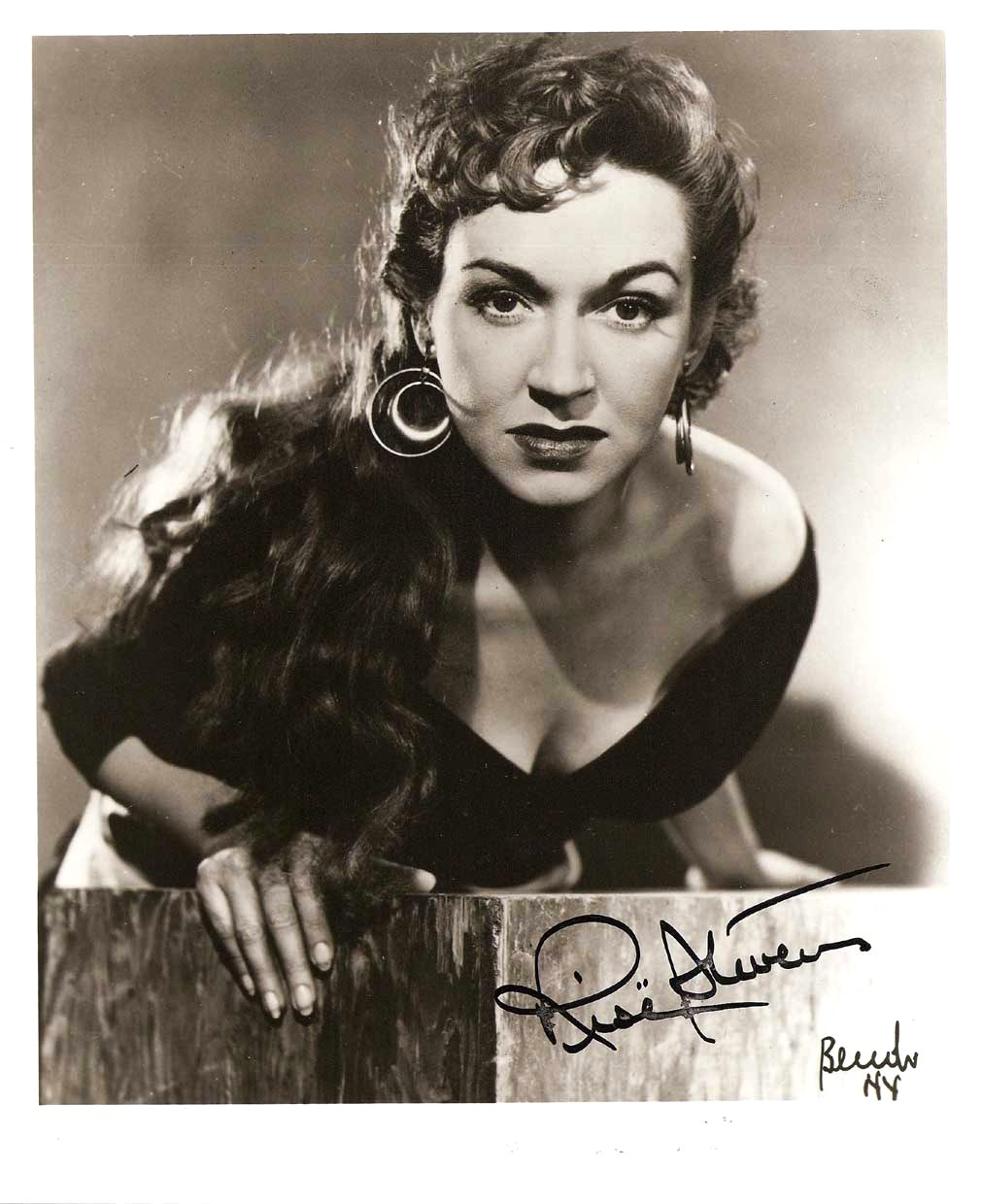
In Memoriam: mezzo-soprano Risë Stevens 1913 - 2013

Internationally renowned mezzo-soprano, turned Hollywood actress, Risë Stevens - who had a 23-year career with the Metropolitan Opera - died on Wednesday at her home in Manhattan ... less than 3 months before her 100th birthday.

On the Met’s roster from 1938 to 1961, Ms. Stevens was a superstar in an era when operatic superstardom was conferred mostly on sopranos and tenors. While at the Met, she performed everything from Fricka in Die Walküre and Octavian in Der Rosenkavalier to Cherubino in La Nozze di Figaro and the title role in Mignon. And then, there was Carmen ... for which she is probably best known.

Over her 23 years and 351 performances at the Met, she performed with singers who shared her legendary status: Kirsten Flagstad, Lauritz Melchior, Lotte Lehmann, Bidú Sayao, Ezio Pinza, Patrice Munsel, Zinka Milanov, Richard Tucker, Leonard Warren, Eleanor Steber, Kurt Baum, Christa Ludwig, Leonie Rysanek, Walter Berry, Roberta Peters, Lucine Amara, Ramon Vinay and Rosalind Elias.

On the operatic stage, Stevens was known for her expansive repertory, her honed acting skills, her precise musicianship and, of course, her voice. Some called it "velvety" - while others called it "smooth and warm", "rich" and "luscious". Her voice was her prized possession and she treated it as such. In fact, in 1945, Lloyd’s of London insured her voice for $1 million. Though she occasionally sang Wagnerian roles early in her career, she soon abandoned them in favor of the less heavy, though no less rich, parts to which her voice was ideally suited.

Known to the public not only through her operatic superstar status, but also through her appearances on radio, television, in print and on the big screen, Stevens never let her fame overcome her. She was always the original down-to-earth, Bronx-born diva.

After retiring from the stage, Ms. Stevens had a prominent second career as an arts administrator. In 1964 she was named, with Michael Manuel, a general manager of the new Metropolitan Opera National Company - which was the Met's touring ensemble. Unfortunately, the company folded in 1967 due to lack of funding. Stevens was later the executive director of the Metropolitan Opera National Council Regional Auditions.

In 1975, Ms. Stevens assumed the presidency of the Mannes College of Music - which is a small conservatory that is now part of the New School here in Manhattan. She helped the college overcome a substantial budget deficit and was the chief advocate for recruited world-renowned musicians onto the school's faculty. One such musician was pianist Vladimir Horowitz. In 1978, Stevens resigned citing differences with some of the school's board members.

Among Risë Stevens' awards are an honorary doctorate from Mannes in 1980. In 1990, she was an honoree of the Kennedy Center in Washington DC. In 2011, Stevens received Lifetime Honors from the the National Endowment for the Arts Opera Honors... to see the Risë Stevens Tribute from the National Endowment for the Arts National Opera Honors, I highly encourage you to click here.

Risë Stevens is survived by her son, Nicolas Surovy.

Friday, February 8, 2013

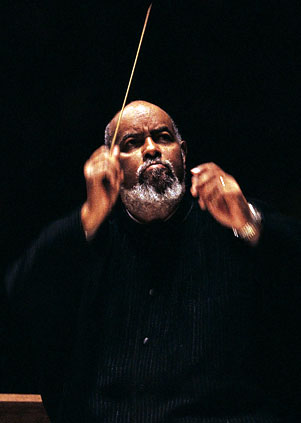
In Memoriam: Maestro James DePreist 1936-2013

One of our country's finest conductors, James DePreist, has died - the Director Emeritus of Conducting and Orchestral Studies at The Juilliard School and Laureate Music Director of the Oregon Symphony was 76 years old.

James DePreist was born in Philadelphia to James and Ethel Anderson DePreist and was the nephew of legendary contralto Marian Anderson.

He studied composition with Vincent Persichetti at the Philadelphia Conservatory of Music and earned bachelor's and master's degrees from the University of Pennsylvania. In 1962, while on a State Department tour in Bangkok, he contracted polio but recovered sufficiently to win a first prize in the Dimitri Mitropoulous International Conducting Competition. He was selected by Leonard Bernstein to be an assistant conductor of the New York Philharmonic for the 1965-66 season. DePreist made his highly acclaimed European debut with the Rotterdam Philharmonic in 1969. In 1971 Antal Dorati chose him to become his Associate Conductor with the National Symphony in Washington, D.C.

For more than three decades Maestro DePreist served as Music Director of various institutions such as Orchestre Symphonique de Québec, the Malmö Symphony Orchestra in Sweden, Monte-Carlo Philharmonic Orchestra and the Oregon Symphony. He was currently serving as Artistic Advisor to the Pasadena Symphony.

As a guest conductor Maestro DePreist has appeared with every major North American orchestra, and internationally he has conducted in Amsterdam, Berlin, Budapest, Copenhagen, Helsinki, Manchester, Melbourne, Montreal, Munich, Prague, Rome, Rotterdam, Seoul, Stockholm, Stuttgart, Sydney, Tel Aviv, Tokyo, Toronto and Vienna. He made his London debut with the London Symphony at the Barbican in April 2005.

With more than 50 recordings to his credit, James DePreist has a substantial presence in the recording arena. His varied recorded repertoire includes a celebrated Shostakovich series with the Helsinki Philharmonic and 15 recordings with the Oregon Symphony which have helped establish that orchestra as one of America's finest.

James DePreist was awarded 14 honorary doctorates and was the author of two books of poetry - about which Maya Angelou said, "His poetry has the tautness of a perfectly pitched viola and much of its resonance".

He was an elected fellow of the American Academy of Arts and Sciences and the Royal Swedish Academy of Music, and was a recipient of the Insignia of Commander of the Order of the Lion of Finland, the Medal of the City of Quebec and was an Officer of the Order of Cultural Merit of Monaco.

In 2005 President George W. Bush presented James DePreist with the National Medal of Arts, our nation's highest honor for artistic excellence.

Wednesday, December 12, 2012

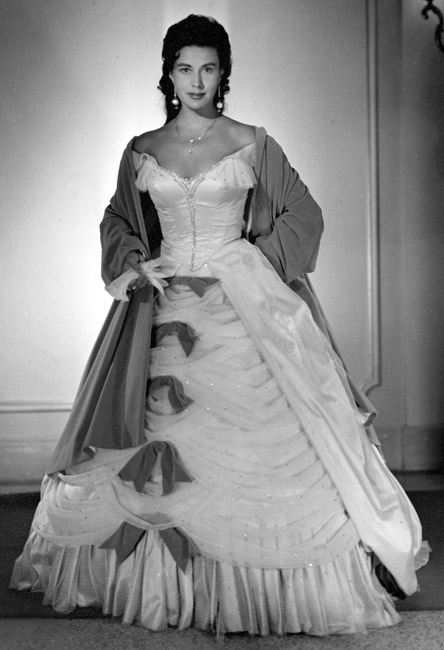
In Memoriam: Soprano Lisa Della Casa 1919-2012

Swiss-born soprano Lisa Della Casa, whose performances of Mozart and Strauss won her wide acclaim as one of the finest sopranos of her generation, has died at the age of 93.

The Vienna State Opera, where she had given more than 400 performances, said she died on Monday in the northern Swiss town of Muensterlingen.

Salzburg Festival President Helga Rabl-Stadler recalled Della Casa's performances as "sublime moments for which she was celebrated by audiences and critics."

Della Casa was born near the Swiss capital Bern in 1919 and later trained in Zurich. She first performed in 1941 in the Swiss town of Solothurn-Biel, in the title role of Madama Butterfly - she was only 22 years old.

Her storied career took her to many of the world's great opera stages. With her Covent Garden debut as Richard Strauss's Arabella in 1953, she became identified for the role because of her singing and her beauty. That same year she debuted as Countess Almaviva at the Met and went on to appear over 100 times.

After her retirement in 1974, she lived with her husband, Dragan Debeljevic, whom she married in 1949, at their castle on Lake Constance in northern Switzerland.

Tuesday, December 11, 2012

In Memoriam: Soprano Galina Vishnevskaya 1926-2012

Reuters reports that Galina Vishnevskaya, the Russian soprano whose voice entranced composer Benjamin Britten and persuaded violinist Mstislav Rostropovich to become her third husband has died at the age of 86.

As a teenager, Vishnevskaya came to prominence shortly after World War Two and by the 1960s had become an international opera sensation filling some of the world’s greatest theaters.

Her talents were so mesmerizing that British composer Britten wrote the soprano part of his “War Requiem” especially for her and Russian composer Dmitri Shostakovich chose her for a renowned rendition of his opera Lady Macbeth of Mtsensk.

“Vishnevskaya was a flag-bearer of Russian culture, a singer of the highest rank,” Georgian-born tenor Zurab Sotkilava told Kommersant daily newspaper.

Tributes from President Vladimir Putin, Prime Minister Dmitry Medvedev and others appeared in the Russian media quickly for a singer born in the Soviet city then known as Leningrad (St. Petersburg), who went on to live a life nearly as dramatic as some of the roles she sang on stage.

Vishnevskaya took to the local stage for the first time at the age of 18 - going on to enchant audiences as one of the lead soloists at Moscow’s prestigious Bolshoi theatre where she sang some 30 different roles. The theatre held a moment of silence in her honor before Tuesday’s performance of Turandot.

The Soviet authorities forced the singer and her husband Rostropovich to flee the country in 1974 for supporting Nobel prize-winning dissident writer Alexander Solzhenitsyn. After being forced to flee, every video recording of Vishnevskaya's performances were destroyed.

She lived, performed and directed opera in the United States and France until 1982. After returning home, Vishnevskaya wrote the autobiography “Galina” in which she openly criticizes the Soviet authorities.

Aida, Eugene Onegin, Tosca and Madame Butterfly were just a few of her crowning roles. During her career, Vishnevskaya was awarded some of the most prestigious Russian and foreign medals, including the medal "For the Defense of Leningrad" and orders "For Merit to the Fatherland", third and second class.

Vishnevskaya opened her own opera center in Moscow in 2002 where she remained Artistic Director until her passing.

Tuesday, December 4, 2012

In Memoriam: Gloria Davy 1931-2012

Gloria Davy as Aida. Just days after her Met Opera debut in the same role.
Gloria Davy, the first African-American singer to perform Aida at the Met has died in Switzerland after a long illness. She was 81 years old.

The daughter of immigrant parents from Saint Vincent, in the Windward Islands, the soprano was born in Brooklyn, NY. Educated at P.S. 129 in Brooklyn, the High School of Music and Art and the Juilliard School, where she studied with Belle Julie Soudant, Ms Davy was twice a Marian Anderson Award winner and received the top prize of the National Music Education League. In April 1954, while doing a post-graduate year's special study in opera at Juilliard, Davy appeared as Countess Madeleine in the U.S. premiere run of Richard Strauss's Capriccio.

Davy's beauty, poise and grace — as well as her attractive, well-trained voice — seemed ingredients for sure-fire stardom, but success was hard won for African–American singers in the 1950s, and repertoire was often limited to those roles considered "acceptable" for artists of color. As was the case with her fellow Juilliard alumna Leontyne Price, Davy had one of her first big successes as Gershwin's Bess. In fact, in 1954, Davy replaced Price as Bess in an international tour of Porgy and Bess.

During a scheduled tour stop in Milan, conductor Victor de Sabata was so impressed with Davy that he recommended she study the role of Aida for a future engagement at La Scala. Davy stayed in Italy for fifteen months, working on the role, and began to make a name for herself as a concert singer. The scheduled La Scala Aida was canceled "because of a political upheaval," as Davy explained in a 1958 OPERA NEWS interview, but the role served for her professional opera debut, in Nice, in January 1957, and for her opera debuts in Bologna, Italy and Zagreb, Yugoslavia.

In July 1957, Davy won favorable reviews in a New York Philharmonic concert of Aida excerpts at Lewisohn Stadium in Manhattan. In October of the same year, Davy sang Anna Bolena to Giulietta Simionato's Giovanna Seymour in the American Opera Society's concert presentation of Donizetti's Anna Bolena at Manhattan's Town Hall.

No long after that fateful concert performance, Davy made her Metropolitan Opera debut as Aida. On that February night in 1958, the 27 year old debutant shared the Met stage with Kurt Baum as Radamès Irene Dalis as Amneris and Leonard Warren as Amonasro. Although other African–American artists had appeared with the Met before Davy's debut — chief among them Marian Anderson and Robert McFerrin, who both made Met debuts in 1955 — Davy was the first artist African-American to sing the role of Aida, an Ethiopian princess, with the company. Time magazine announced, "Davy proved that the Met is where she belongs." However, despite good reviews, Davy's Met career was limited to just fifteen performances in four seasons; Nedda in Pagliacci, Pamina in Die Zauberflöte and Leonore in Il Trovatore, the role of her last Met performance, in April 1961.

After Davy married Swiss stockbroker Herman Penningsfield, in 1959, she chose to base her professional activities in Europe, where she had important engagements in Berlin, Aachen, Geneva, Vienna, London, Strasbourg, Mannheim and Milan in the early 1960s. She continued to make notable U.S. appearances, though. In October 1960, Davy sang the title role in a concert performance of Strauss's Daphne with Thomas Scherman's Little Orchestra Society at Town Hall and was the soprano soloist in an international telecast of Beethoven's Ninth Symphony relayed from the United Nations and conducted by Eugene Ormandy.

After Davy stopped performing, she taught voice. Following her retirement from Indiana University's Jacobs School of Music, where she served on the voice faculty for more than a decade (1984–97), Davy made her home in Geneva.

Tuesday, August 7, 2012

In Memoriam: Marvin Hamlisch (1944-2012)


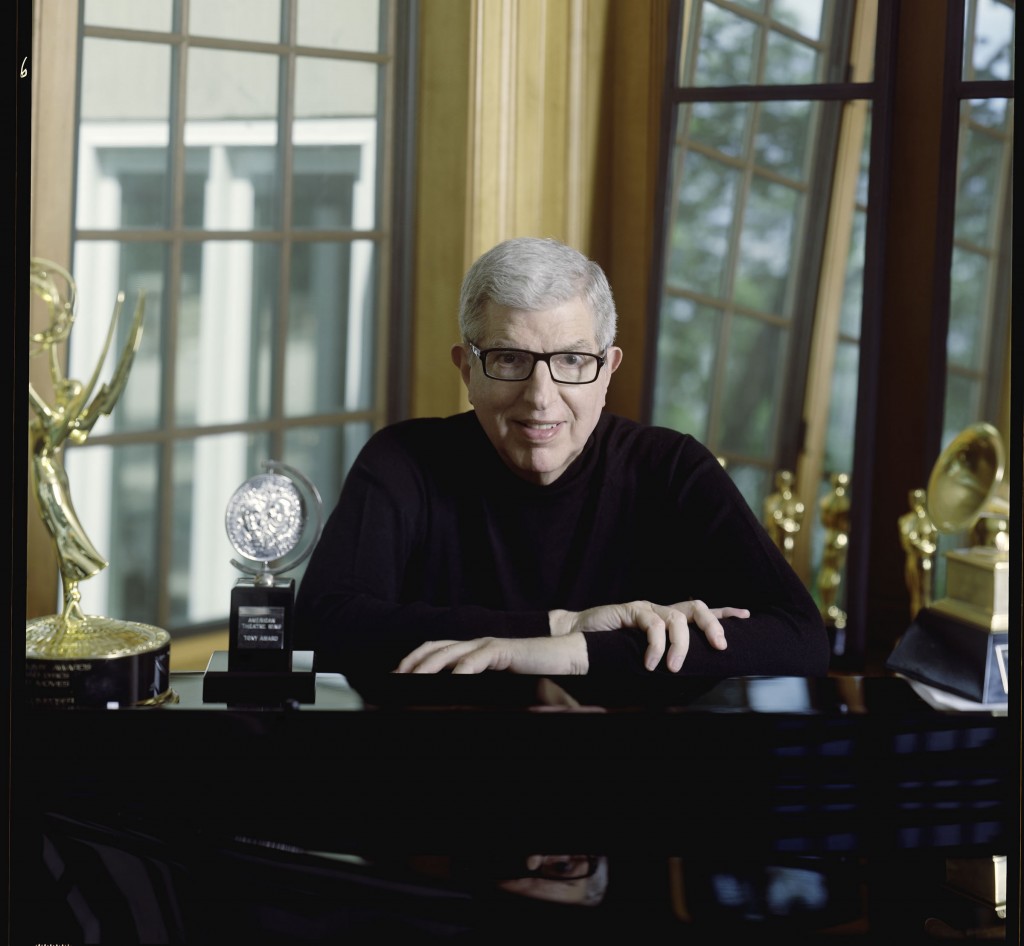
Like so many people, I was very saddened to hear this morning that Marvin Hamlisch has died at the age of 68.

A statement from his family, which was released through a representative on Tuesday, said that Mr. Hamlisch collapsed after a brief illness and died on Monday in Los Angeles. They did not provide additional details.

His sudden death took many by surprise. On his own Facebook page, he said he was looking forward to returning to the podium of the Pasadena Symphony and Pops: "Love you Pasadena symphony ! ... Wow ! Can't do it without you ! See you in September!"

In a career that extended from small screen to big screen and Broadway to Symphony Pops, Marvin Hamlisch won almost every award available to someone of his stature. He was nominated for an Academy Award twelve times and took home three: for the score of The Sting as well as the score and title song from The Way We Were. He won a Tony Award for his score to the musical A Chorus Line, which also won the Pulitzer Prize for Drama in 1976. Hamlisch also took home four Grammy Awards and four Emmy Awards - two of those Emmys were for the television special, Barbra Streisand: The Concert.

In fact, it was with Barbra Streisand that Marvin Hamlisch had one of his deepest artistic collaborations.

The duo met in 1964 when Hamlisch was the rehearsal pianist for the Broadway production of Funny Girl starring Streisand. Later, not only did Hamlisch write the ballad The Way We Were - which is synonymous with Streisand's name - but, he also wrote the score for her 1996 film The Mirror has Two Faces, and also served as musical director and arranger of Streisand’s 1994 concert tour. It was during those concerts that she introduced him as her "conductor, arranger and dear, dear friend, Marvin Hamlisch".

Broadway music held a special fascination for him. In 1986, Marvin Hamlisch told The Associated Press:
Maybe I'm old-fashioned, but I remember the beauty and thrill of being moved by Broadway musicals — particularly the endings of shows. The end of West Side Story, where audiences cried their eyes out. The last few chords of My Fair Lady. Just great.
Marvin Hamlisch also felt at-home on the conductors podium of numerous symphony orchestras. At the time of his death, he was the principal pops conductor for the Pittsburgh Symphony Orchestra, Milwaukee Symphony Orchestra, Dallas Symphony Orchestra, Seattle Symphony, San Diego Symphony and the Pasadena Symphony and Pops - with whom he had just signed a 3 year contract. And, Hamlisch was just about to add another appointment to his list. Next week, he was to be announced as the principal pops conductor of the Philadelphia Orchestra.

In addition to his current conducting duties, Hamlisch was working on a musical adaptation of the Jerry Lewis comedy The Nutty Professor, for which he wrote the score - as well as a new Broadway musical called Gotta Dance. He had also just finished writing the score for a coming HBO movie, Behind the Candelabra, about the life of Liberace.

The legacy that Marvin Hamlisch leaves behind - as well as the passion and fervor with which he constantly worked - will be admired and lauded for decades and decades to come.

In an interview this last July, Mr. Hamlisch talked about the passion he put into each piece of music he composed.
I’m not one of those people who says, ‘I never read reviews,’ because I don’t believe those people. I think they read ‘em. These songs are my babies. And I always say, it’s like having a baby in a hospital, taking a Polaroid and going up to someone and saying, ‘What do you think?’ And he goes, ‘I give you a 3.’ That’s what criticism is like. You’ve worked on this thing forever — ‘I give you a 3.’ And it’s part of you. That’s the bargain you’ve made.
Marvin Hamlisch is survived by his wife of 25 years, Terre.


--UPDATE--

Barbara Streisand just released the following statement on her website:
I’m devastated. He was my dear friend. He’s been in my life ever since the first day I met him in 1963, when he was my rehearsal pianist for 'Funny Girl'. He played at my wedding in 1998… and recently for me at a benefit for women’s heart disease. The world will remember Marvin for his brilliant musical accomplishments, from 'A Chorus Line' to 'The Way We Were,' and so many others, but when I think of him now, it was his brilliantly quick mind, his generosity, and delicious sense of humor that made him a delight to be around. Just last night, I was trying to reach him, to tell him how much I loved him, and that I wanted to use an old song of his, that I had just heard for the first time. He was a true musical genius, but above all that, he was a beautiful human being. I will truly miss him. ~ Barbra Streisand
For more reaction from stars like Liza Minnelli, Aretha Franklin, Idina Menzel, Alan Menken and former First Lady Nancy Reagan, just click over to The Huffington Post.

Monday, July 2, 2012

In Memoriam: soprano Evelyn Lear 1926-2012

Great American sop­rano Evelyn Lear died yes­ter­day near Baltimore, MD. She was 86.

As one of the twen­ti­eth century’s most celebrated American opera and con­cert sing­ers, Lear cultivated a long and remarkable career spanning some 5 dec­ades and includ­ing 7,500 operatic and con­cert performances.

Between 1959 and 1992, she appeared in more than forty operatic roles, appeared with every major opera com­pany in the US and won a Grammy Award in 1966 for the record­ing of Wozzeck with Diet­rich Fischer-Dieskau and Fritz Wunderlich.

Evelyn Shulman was born Jan, 8, 1926, in Brooklyn. Her father, a Siberian immigrant, became a lawyer, and her mother was a professional classical singer. Her grandfather was a Jewish cantor. As a girl, Mrs. Lear studied the piano and played the French horn with a Tanglewood student orchestra conducted by a young maestro - Leonard Bernstein.

When she was about 18, she married Walter Lear, a doctor, and shortly thereafter, moved to Arlington, VA. Her nonprofessional opera debut took place, oddly enough, at the Agriculture Department, where she sang in Kurt Weill’s American folk opera Down in the Valley.

After she and her first husband divorced, Mrs. Lear returned to New York in the 1950s and began studying at Juilliard, where she met baritone Thomas Stewart while working on a duet from Porgy and Bess.

Her death comes six years after Mr. Stewart - to whom she had been married for 51 years. Each singer enjoyed a remarkable career; as a team, they were even more formidable and delectable, onstage and off.

Evelyn Lear is survived by children from her first marriage, whom Thomas Stewart legally adopted, Jan Stewart of Arlington and Bonni Stewart of Mississauga, Ontario. She also had two grandchildren.

Friday, May 18, 2012

In Memoriam: Dietrich Fischer-Dieskau 1925-2012

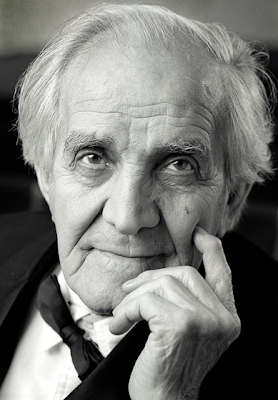
German baritone, Dietrich Fischer-Dieskau died on Friday at his home in Bavaria. He was 86.

Fischer-Dieskau possessed one of the most beautiful baritone voices of the 20 century. His mastery of vocal technique and interpretation made him one of the finest performers of art songs from the 1940s to his official retirement in 1992. Although his vocal technique was such that soprano Elisabeth Schwarzkopf called him "a born god who has it all.", Fischer-Dieskau's voice was rather small. Despite it's lack of power, he performed relied on his technique to carry him through recorded many heavy heroic baritone and bass-baritone operatic roles such as Wotan, Hans Sachs, Amfortas, Telramund, Iago, Macbeth, Scarpia, and Jokanaan.

For many years after his retirement from singing, Fischer-Dieskau remained an influential teacher and orchestra conductor.

Baritone Thomas Hampson recently said of Fischer-Dieskau:
Few artists archieve the level of recognition, admiration and influence of Fischer-Dieskau, and even fewer live to see, that influence realised during their own lifetime. Ushering in the modern recording era, he challenged our percepton and processes of how recordings could be made, explored the possibilities of modern recording and exploited the potential for popularity of classical music; and all this while setting standarts of artistic archievment, integrity, risk-talking, and the aestetic ideal that became our new norm. Whenever we bask in the beauty of his tone, revere the probing, questioning power of his intellect, of simply wonder at the astonishing physical abilities throught all that he has archieved in his long recording career, we must also pause and say THANK YOU to this great artist, whose legacy, like a great and bright star lighting the way for those who follow in his passion for singing, is exemplary in every way.
Tall and elegant, with what some called "a military dignity", he was blessed with an impressive physical presence, which he used to his benefit in performance. His manners were infallible and he guarded his privacy carefully. His American publicist Herbert Breslin put it more crudely, claiming that the baritone “had an almost priestly attitude”.

As a side note - rather coincidentally, Herbert Breslin, who was Luciano Pavarotti's manager as well as publicist for Elisabeth Schwarzkopf, Renata Tebaldi, Joan Sutherland, Marilyn Horne, pianist Alicia de Larrocha and many others died yesterday at the age of 87.

Fischer-Dieskau's reserved demeanor was many times misinterpreted because when you first met him, he could seem cold and calculating. But when he opened up, many say he displayed a rich sense of humour and capacity for warm friendship. In a business filled with divas and divos, he had few personal enemies.

Dietrich Fischer-Dieskau is survived by his fourth wife, Hungarian soprano Júlia Várady. He is also survived by three sons - Mathias (stage designer), Martin (conductor), and Manuel (cellist) - from his first marriage to cellist Irmgard Poppen who died in 1963 of complications following childbirth.

To honor the life of this most incredible baritone, I give you a performance of one of the pieces for which he was most known. Schubert's Der Erlkönig.

Schubert's Der Erlkönig is quite challenging dramatically because there are four separate characters – the narrator, father, son, and the Erlkönig. As the story goes, a young boy is being carried home at night by his father on horseback. The son seems to see and hear beings his father does not - the Erlkönig, who promises games, flowers on the beach and his daughters who will wait on the child hand-and-foot. The father reassuringly explains what the child sees – a wisp of fog, rustling leaves, shimmering willows. The child shrieks that he has been attacked. The father, horrified, rides faster and faster. Upon arriving home he recognizes that the boy is dead ... "In seinen Armen das Kind war tot."

Monday, April 9, 2012

In Memoriam: Mike Wallace 1918-2012

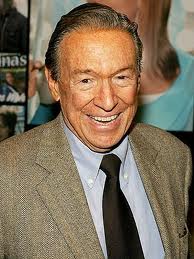
Often called the Grand Inquisitor of interviewers, Mike Wallace, who once declared there was "no such thing as an indiscreet question," died on Saturday at the age of 93.

In almost 40 years on the ground-breaking investigative journalism program "60 Minutes," he worked on some 800 reports, won 21 Emmys and developed a relentless on-air style that was characterized as interrogation rather than interview. In fact, during once such interrogation of a stage and screen legend, Mike Wallace became the only interviewer to cause the diva to cry. That legend: Barbra Streisand.

Wallace interviewed every U.S. president since John F. Kennedy - with the exception of George W. Bush -- and dozens of other world leaders. He also interviewed everyone from Malcolm X to Janis Joplin, Martin Luther King Jr., Johnny Carson and Playboy founder Hugh Hefner.

But, after zillions of interviews, which was Mike Wallace's favorite? Surprisingly enough, Morley Safer wrote in a tribute on CBSNews.com:
"It's strange, but for such a tough guy, Mike's all-time favorite interview was the one with [legendary], pianist Vladimir Horowitz. The two of them, forces of nature both: Sly, manic, egos rampant. For Mike -- a red, white and blue kind of guy -- Horowitz played 'The Stars and Stripes Forever.' It almost brought tears to the toughest guy on television."
One of my favorite Mike Wallace interviews is one that he did with soprano Maria Callas in her Paris apartment. He aggressively goes after Callas in a way that 5 or 10 years prior to this interview, he would not have gotten away with. Callas would have had his head on a platter. But, in 1973, Callas was a different person ...


Mike Wallace, rest peacefully.

Sunday, February 12, 2012

In Memoriam: Whitney Houston 1963-2012

Singer Billie Holiday died at 44. Judy Garland died at 47. Dinah Washington died at 39... ... ...

And tonight, news broke that vocal legend Whitney Houston has died at 48.  The singer was found unresponsive and later pronounced dead in her Beverly Hilton Hotel room. She was at the Beverly Hilton Hotel in order to attend Clive Davis' annual pre-Grammy Awards party.  The party went on as planned, even as Whitney's body remained in the 4th floor room in which it was found. 

Real voices. Real stars. Timeless - but, tragically gone too soon.

It's so very sad.


Tuesday, January 31, 2012

In Memoriam: Camilla Williams 1919-2012

Ms. Camilla Williams, known worldwide as the first African American woman to have performed with a major opera company, has died. Williams died of complications from cancer on Sunday at her home in Bloomington, Indiana. She was 93.

Camilla Williams was born in 1919 in Danville, Virginia. The daughter of a chauffeur and his wife, Williams was introduced to classical music at an early age. When a Welsh voice teacher came to the segregated city to teach at a school for white girls, a young Williams took lessons privately from the teacher who had to teach the black girls in a private home.

A graduate of Virginia State College, she was teaching third grade and music in Danville schools in 1942 when she was offered a scholarship from the Philadelphia alumni association of her alma mater for vocal training in Philadelphia. Shortly thereafter, she began her studies under Marion Szekely-Freschl and and also began working as an usher in a theater.

Remarkably, just four years later on May 15, 1946, Camilla Williams debuted with New York City Opera - singing what would become her signature role, Cio-Cio-San, in Madama Butterfly. Her debut was the first step on a path that would eventually carry singers like Grace Bumbry, Jessye Norman and Kathleen Battle to the operatic stage. According to a New York Times review of the performance, she displayed "a vividness and subtlety unmatched by any other artist who has assayed the part here in many a year". She also appeared with City Opera as Nedda, in Pagliacci, Mimi in La Boheme and in 1948 she sang Aida.

Williams teaching at Indiana Univ. - 1985
Her trailblazing didn't stop there - in 1954, Williams broke yet another color barrier when she became the first African American to sing a major role with the Vienna State Opera, again singing Cio-Cio-San. In 1963, she sang the National Anthem at the White House and, that same year, sang it before 200,000 people prior to Martin Luther King's legendary "I Have a Dream" speech at the Lincoln Memorial. She also sang at King's Nobel Peace Prize ceremony the following year. Her pioneering efforts as an African-American opera singer were profiled in the 2000 PBS documentary Aida's Brothers and Sisters: Black Voices in Opera. She was also profiled in the 2006 PBS Documentary The Mystery of Love.

She continued to sing throughout the United States and Europe with some of the world's leading opera companies until her retirement from the stage in 1971. Williams then went on to teach voice at Brooklyn College, Bronx College and Queens College before arriving at Indiana University. She remained a professor of voice at the IU Jacobs School of Music from 1977-97 and became a professor emeritus of voice upon her retirement.

Tuesday, January 10, 2012

In Memoriam: The in-dash CD player

Alright, Chiclets ... how many of you either had, or knew someone who had an 8-track player in their car?  NO ... I didn't have one.  But, when I was a young lad, my sister drove a 1978 Buick Regal and you know that beauty came with an 8-track player. 

Then, the 8-track made way for the Cassette Tape ... and thank goodness because those tapes took up a lot less space on the floor board or in the back seat.

After that, the Cassette Tape made way for the CD .... and now, the CD is making way for the ... well, nothing.  The CD player, as MSNBC.com is reporting, is beginning to be dismissed from the dash:
CD players in cars look set to go the same way as the dodo bird, according to a report in industry trade publication Automotive News.

With content and computing power migrating to smartphones, which can now channel music, navigation and other applications to relatively simple and low-cost onboard infotainment systems, CD players are becoming increasingly irrelevant in cars, the report says.

Automakers also want to get rid of optical drives -- that is, CD or DVD players -- because they are expensive and appeal mainly to older motorists, according to the report.

Indeed, the 2013 Chevrolet Sonic RS, which debuted this week at the Detroit auto show and will go on sale in the United States this summer features an optional MyLink infotainment system that lets motorists make hands-free phone calls, listen to MP3 music and get route guidance by linking their smartphones to the vehicle's infotainment system. But no CD player, Automotive News said.
I knew this day would come ...

Wednesday, December 14, 2011

In Memoriam: Co-founder of the Amato Opera, Anthony Amato 1920-2011

Anthony Amato. Photo © Harald Schrader
Anthony Amato, co-founder of the Amato Opera, died on Tuesday morning at the age of 91. The news was initially posted to Facebook this afternoon by former Amato employee and director of the Amore Opera, Nathan Hull.

For over six decades, the Amato Opera, formed by Amato and his wife Sally Bell Amato, was a fixture on the Bowery and in the East Village arts scene. After its inaugural production of The Barber of Seville in Our Lady of Pompeii Church on the corner of Bleecker and Carmine Streets in 1948, it had stints at the 92nd Street Y, the Fashion Institute of Technology, the Washington Irving High School, 159 Bleecker Street and the Town Hall. The company finally settled in a postage-stamp–sized building next to CBGB's in 1964, where it operated continually until it closed in 2009.

Against the posh spaces of City Center and Lincoln Center, the Amato Opera was a feisty diamond in the rough, making grand opera thrive in a theater that seated 107 and contained a mere 20-foot stage. Entrances and exits were often made by running around the building from lobby to stage door entrance and back again and costume changes were known to take place in the theater’s adjacent gas station. It was part of the draw of the company—you couldn’t help but feel a warm, tingly glee in the Momus scene of La bohème, sitting mere inches away from the bohemians, no matter how many times you may have seen the opera in various settings grand and small.

The son of an Amalfi Coast businessman, Amato was encouraged to follow in his father’s footsteps and pursue music as a simple hobby. Amato ultimately achieved both in tandem with Sally, whom he met in a production at New Jersey’s Papermill Playhouse and married in 1945. "We were in the chorus together and on the first day of rehearsal I accidentally touched her back a bit with my foot," he said of their first meeting in an interview on IMDB.com. "She glared at me and thought I was an awful Italian." In lieu of having children, they gave birth to the Amato Opera in 1948. Tony acted as artistic director and conductor and Sally served in the Jane-of-all-trades position creating costumes, running lights, managing the box office, handling publicity and singing under the name Serafina Bellantoni. The two also made a spaghetti and meatballs that achieved cult status among the Amato singers.
[Source]
This story reminds me of another impresario of the "old school" - Francesco Pace - founder of LA Opera.

For more coverage on the passing of Anthony Amato, visit www.wqxr.org.

Thursday, October 6, 2011

In Memoriam: Steve Jobs 1955-2011

Steve Jobs saw the future and led the world to it. He moved technology from garages to pockets, took entertainment from discs to bytes and turned gadgets into extensions of the people who use them.

Jobs, who founded and ran Apple, told us what we needed before we wanted it.

"To some people, this is like Elvis Presley or John Lennon. It's a change in our times. It's the end of an era," said Scott Robbins, 34, a barber and an Apple fan. "It's like the end of the innovators."

Apple announced his death without giving a specific cause. He died peacefully on Wednesday, according to a statement from family members who were present. He was 56. [MSNBC.com]

Visit msnbc.com for breaking news, world news, and news about the economy

Sunday, September 11, 2011

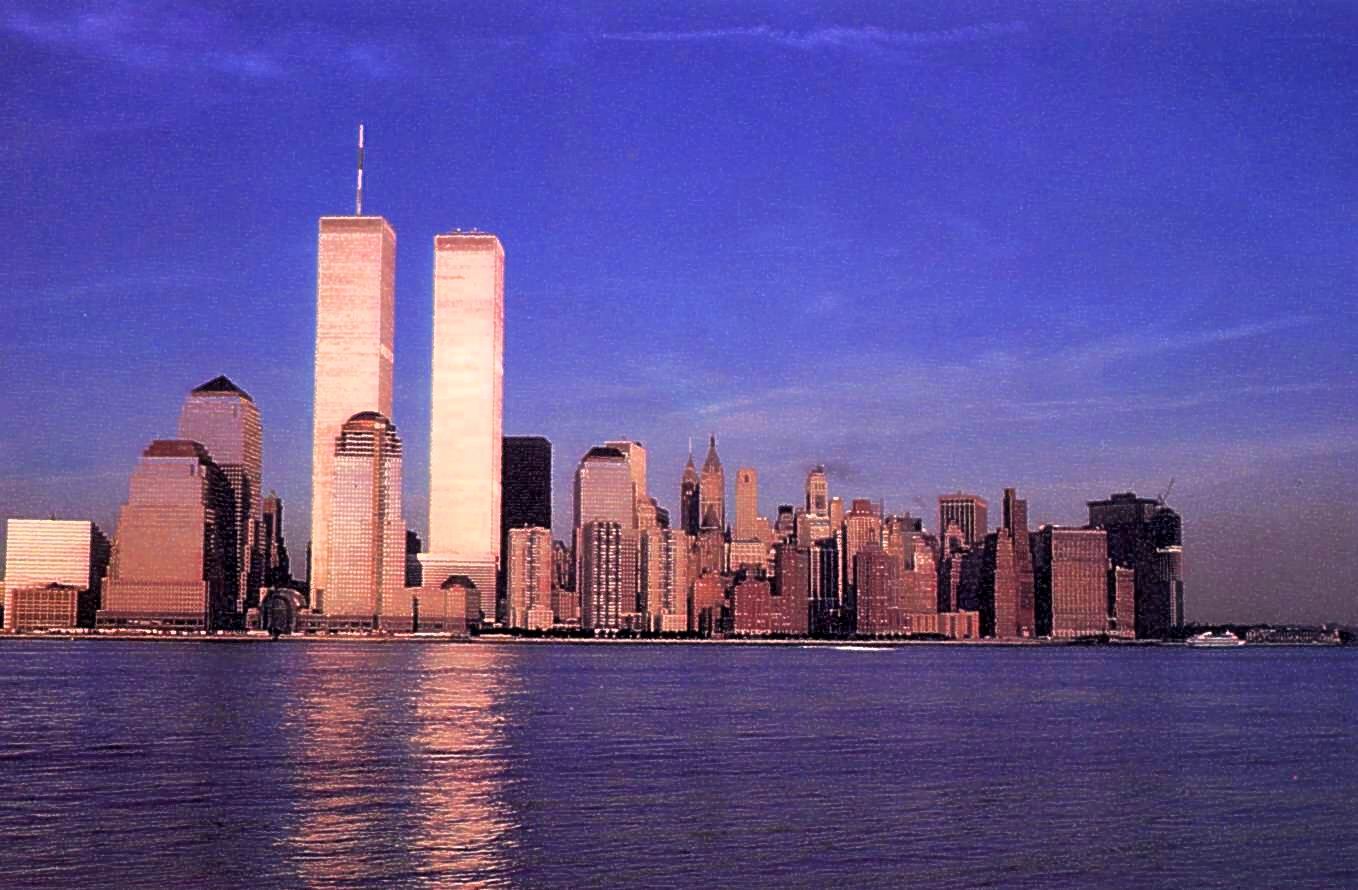
In Memoriam: 10 years later ...

It is absolutely impossible to forget:


My thoughts and prayers of Peace go out to all those whose lives were effected by the tragedy on September 11, 2001.

Wednesday, June 1, 2011

In Memoriam: Giorgio Tozzi 1923-2011

Tozzi as Ramfis in Aida
Star of Broadway, TV and one of opera's greatest un-sung heroes has passed away. Bass Giorgio Tozzi has died at the age of 88. Fred Plotkin of WQXR writes in part:
As the news of death of the great bass Giorgio Tozzi has begun to spread, a few people have asked me, “Where in Italy was he from?” The answer was Chicago. Tozzi was born in the same year as New Yorker Maria Callas, another artist to whom many European opera lovers have assigned a continental birth certificate. Both were Americans of immigrant background, just like President Obama. Tozzi's was an American story but, as with all of the greatest singers, he belonged to all of Planet Opera.
While F. Paul Driscoll writes for OperaNews:
A stimulating, versatile artist of peerless imagination, bass Giorgio Tozzi, one of the most admired — and most beloved — artists on the Met roster for twenty-one seasons, has died. He was eighty-eight.

Beginning with his company debut, as Alvise in
La Gioconda, in 1955, Tozzi sang thirty-eight roles in his 528 Met performances. Tozzi's Met assignments ranged from Don Basilio and Mozart's Figaro to Sparafucile, Filippo II and Boris Godunov; whether his vehicle was comic or tragic, Tozzi created characterizations that were models of elegance and concision, performances as remarkable for their dramatic conviction as for their vocal beauty. He was one of the Met's most valuable players, deployed in eleven new productions for the company during his time with them ...

... A cheerful, unfailingly positive colleague, Tozzi managed to stay above opera-house politics, remaining on good terms with his fellow basses and with Rudolf Bing, the Met's formidable general manager, for most of Tozzi's career in the house. Tozzi's relationship with Bing survived the bass's refusal of the role of Enobarbus in the world premiere of Samuel Barber's
Antony and Cleopatra, the opera that inaugurated the Met's Lincoln Center home in 1966; when Tozzi turned down the Barber premiere — in a 2002 OPERA NEWS interview with Martin Bernheimer, Tozzi allowed that he was not eager to spend time learning an opera that might not last long in the repertory — Bing offered the bass his choice of new roles in the company's first Lincoln Center season. Tozzi chose Hans Sachs, which became one of his favorite assignments; his masterful characterization of the cobbler-poet is preserved in Joachim Hess's 1971 film of Leopold Lindtberg's Hamburg Staatsoper production.

Tozzi made his Broadway debut (as George Tozzi) in 1948, as Tarquinius in
The Rape of Lucretia. The following year, he appeared in London's West End in the musical Tough at the Top, playing a boxer who falls in love with a princess. He returned to Broadway in 1979, as Tony in a revival of The Most Happy Fella, which won him a Tony Award nomination. Tozzi also starred as Emile DeBecque in several South Pacific productions — he provided the soundtrack vocals for Rossano Brazzi's DeBecque in the 1958 film — as well as in regional and stock stagings of Fiddler on the Roof, The Great Waltz, Fanny, Music in the Air and Man of La Mancha.

Tozzi's warmth and persuasive charm made him a natural on television. In addition to solo turns on The Ed Sullivan Show, The Bell Telephone Hour and other variety programs, Tozzi was a memorably vulnerable Boris Godunov (in English) in the 1961 NBC Opera Company production of Mussorgsky's opera and a dignified King Melchior in NBC's 1978 television film of
Amahl and the Night Visitors. A vivid actor even without a score to support him, Tozzi appeared in non-singing roles on The Odd Couple, Kojack and other television series, as well as the 1976 mini-series Captains and the Kings and the 1973 feature film Shamus.
Bravo, Maestro Tozzi. Rest Peacefully.

Wednesday, March 23, 2011

In Memoriam: Dame Elizabeth Taylor 1932-2011

My continued fascination with all things Old-Hollywood has some sadness mixed in it, today. Dame Elizabeth Taylor, the Academy Award winning actress whose saucy screen persona, rocky personal life and enduring fame, class, magnetism and stunning beauty made her a template for the modern celebrity, died of Congestive Heart Failure early this morning at Cedars-Sinai Medical Center in Los Angeles. She was 79 years old.

Truly one of the last of the iconic, Old-Hollywood movie stars, Taylor was named seventh on The American Film Institute's Female Legends list ... right smack-dab between #6 Marilyn Monroe and #8 Judy Garland. She starred in some 50 films, including screen classics such as Cat on a Hot Tin Roof, BUtterfield 8 - for which she won her first Academy Award for Best Actress, The Taming of the Shrew, Cleopatra - for which she received a staggering $1 million, a film adaptation of the Stephen Sondheim musical A Little Night Music and of course Who's Afraid of Virginia Woolf? - the only film to be nominated in every eligible category at the Academy Awards ... including a Best Actress win for Taylor. Here's why:


Dame Elizabeth Taylor was not only an actress and Old-Hollywood icon, but she was also a humanitarian who worked tirelessly on behalf of AIDS research. She was also a mother, a grandmother and a great-grandmother.

Her passion for jewelry was well-known and virtually un-paralleled. Over the years she owned a number of famous gems; most notably the 33.19-carat Krupp Diamond and the 69.42-carat pear-shaped Taylor-Burton Diamond, which were among many gifts from husband Richard Burton. Taylor also owned the 50-carat La Peregrina Pearl, purchased by Burton as a Valentine's Day present in 1969. The pearl was formerly owned by Mary I of England, and to prove it Burton sought a portrait of Queen Mary wearing the pearl. After Burton purchased the painting, he and Taylor discovered that the British National Portrait Gallery did not have an original painting of Mary I, so they donated theirs to the gallery.

You can find out more about Taylor's passion for jewelry by checking out her collection as documented in the book Elizabeth Taylor: My Love Affair with Jewelry. She started designing jewels to be sold at Christie's House of Taylor. She also launched three perfumes, "Passion", "White Diamonds", and "Black Pearls", which, together, earn an estimated $200 million in annual sales.

In addition to her movie stardom and perfumes, Dame Elizabeth Taylor - who despised being called "Liz" - was probably best known for her slew of stormy marriages. She was married eight times to seven different husbands: Conrad "Nicky" Hilton (yes, *that* Hilton ... grand-uncle to Paris and Nicky), Michael Wilding, Michael Todd, Eddie Fisher, Richard Burton - X2, Senator John Warner (R-VA) and of course, Larry Fortensky. She had four children: two sons with Michael Wilding, one daughter with Michael Todd and one daughter (adopted) with Richard Burton. Her first grandchild was born when Taylor was only 39 years old. Nine other grandchildren would follow, as would four great-grandchildren.

As the news of Dame Elizabeth Taylor's death broke this morning, ABC News interrupted their regular programming to carry this Special Report:

Taylor's oldest son, Michael Wilding, memorialized his mother this way:
“My Mother was an extraordinary woman who lived life to the fullest, with great passion, humor, and love. Though her loss is devastating to those of us who held her so close and so dear, we will always be inspired by her enduring contribution to our world. Her remarkable body of work in film, her ongoing success as a businesswoman, and her brave and relentless advocacy in the fight against HIV/AIDS, all make us all incredibly proud of what she accomplished. We know, quite simply, that the world is a better place for Mom having lived in it. Her legacy will never fade, her spirit will always be with us, and her love will live forever in our hearts.”
Perhaps Dame Elizabeth Taylor's life is best summed up in her own words:
"I have never felt more alive than when I watched my children delight in something, never more alive than when I have watched a great artist perform, and never richer than when I have scored a big check to fight AIDS. Follow your passion, follow your heart, and the things you need will come."
Rest peacefully, Dame Elizabeth.
Related Posts Plugin for WordPress, Blogger...