Wednesday, October 27, 2010

A Review: Chicago Symphony Orchestra's recording of Verdi's Messa da Requiem

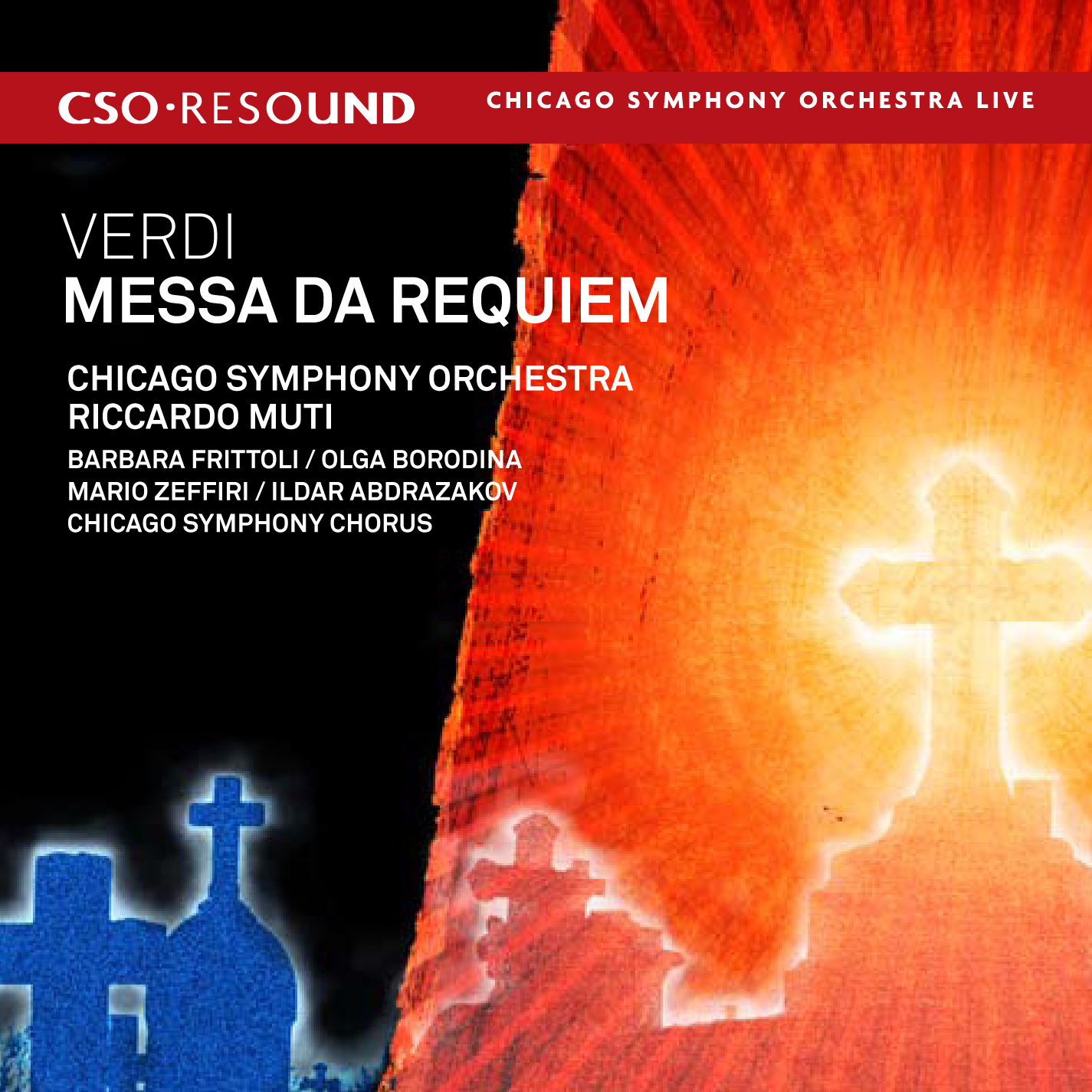
In January of last year, the Chicago Symphony Orchestra and Chorus recorded 3 live performances of Verdi’s Messa da Requiem under the baton of Riccardo Muti. These performances were then brought together in CD form and recently released on the CSO RESOUND label. Having sung the work a few times and fallen in love with it, I thought it was time to break out the critic hat and get to listening.

Finally! A review.

My very first, knee jerk reaction: the Chicago Symphony Chorus is remarkable. From the first permeating Requiem, they communicate each word with a truly velvety sound through which not only definition, but pathos rings forth. Rich in color, the sopranos don’t sacrifice that color as they climb the scale as many soprano sections tend to do… another recording that I have of an English Choir has the sopranos often with a strident straight toned sound that would most likely peel the paint from the walls.

The bass section of this CSO recording truly anchors the overall sound with a darkness and weight that doesn’t drag the group down. The overall singing from all sections is healthy, vibrant and the voices are balanced. By balanced, I don’t mean between sections… that would be what some consider "blending"… which, to me, is something you do with a cocktail - not a group of voices. What I mean is the singer’s voices are balanced individually and within each section giving the sections a commonality of tone.

Their precise use of consonants is extremely effective and not only gives life to the text, but also adds many effects that are present in the music. For example, in the Sanctus portion of the mass, the sibilance is so crisp that it creates almost a percussiveness that brings to mind a distant high-hat.

And then, there’s the Dies Irae. For me, Verdi’s Dies Irae is the portion of the piece that separates the professionals from the amateurs.
Quantus tremor est futures, quando judex est venturus, cuncta stricte discussurus!

What horror must invade the mind when the approaching judge shall find and sift the deeds of all mankind!
They sing this phrase with such a hushed, yet marked intensity that it is - simply put - heart-stirring. Every sound from this chorus is there - spot on and together with ultimate precision.

The Chicago Symphony Orchestra plays spectacularly under the baton of Riccardo Muti [R.] and, again, the detail is to the letter. There is nothing left out. You know, occasionally on these types of recordings (yes, even those from well-known orchestras) you can get a sense of which portions of the piece went under-rehearsed. In this instance, there isn’t that sense – at. all.

Now, before I get to the soloists - I feel the sudden need to share a story.

Back when yours truly was a rookie singer – I think I was in my second year of lessons or something like that – I committed what seemed to be a cardinal sin. I had listened to a recording of a Beethoven’s 9th Symphony and felt that a vocal pedagogy class with my former voice teacher would be a safe place to discuss what I heard.

I know. Why not? Right?

In discussing my observations, I made some rather pointed but relatively harmless comments about a certain "Soprano X". Well, my former voice teacher flipped her lid and wanted me to know that it was NOT ok to talk about any other singers in public. Who did I think I was? "You need to watch every word you say! You never know - ‘Soprano X’ might have a second cousin sitting outside. What if she goes and tells ‘Soprano X’ what you said … the next thing you know, you’re blacklisted from companies. You’ll never be a singer THAT way."

No ... honestly, Friends. I'm not exaggerating.

Even though we all thought this former voice teacher was on the verge of being elected Mayor of Crazytown – I understood her point. A young singer can't really afford to offend anyone by shooting off his mouth about other singers.

Now here I am, years later, and I still find it difficult to speak critically about singers in public. But, for your sake, Chickpeas … I will put aside my fear and carry on.

First off, there is Olga Borodina. These mezzo soprano solos are some of the best singing I’ve heard from her. She gives a very stirring, almost haunting performance and adds just the right amount of thunder to the middle of this quartet. If I were to have one small issue with her performance on this recording, it would be her overly used straight tone. It reminds me of a certain soprano that is known for using straight tone to scoop from note to note. Truly though, Ms. Borodina’s voice is so creamy and lovely, you can easily forgive the issue.

Mario Zeffiri provides a capable tenor. His voice is pleasant enough to the ear, but his upper register lacks the power that you might assume would be necessary when he’s smack dab in the middle of the other voices. His bio boasts that he is an "esteemed interpreter of bel canto repertory" like Don Pasquale, and La fille du régiment - I would much rather listen to him in these works, or perhaps Mozart. But, Verdi … it’s not a good fit for him.

Now, Chiclets – anyone who knows me, knows that I’m big fan of vast, broad and voluminous vibrato. Vast is luscious. Broad is luxurious. Voluminous is savory. But, there is taking the vastness TOO FAR – as in having vibrato that is so boundless, wide and cavernous that you could drive a truck through the oscillations. Soprano Barbara Frittoli allows hers to get to this point in many instances – especially in soft pianissimo singing when her vocal oscillations border on wobble-issimo.

There are many voices out in the world that simply don’t record well. Generally, they are the voices with, shall we say, luxurious vibrati – like Ghena Dimitrova, for example. Her voice was gigantic and had a massive vibrato that sped to the speed of a Porsche at the top of her range. Bless her heart, I actually think that someone replaced Dimitrova’s voice with an air-raid siren without telling her. That being said, it is a well known fact that Dimitrova's voice just didn’t record well. But it sure was a head-splitting thrill in-person. Perhaps Frittoli’s voice is like this. In this case though, I think the unrestrained and burly undulations suck the life out of the music at times.

As for bass Ildar Abdrazakov … I can’t deal, Friendlies. I. Just. Can't. In fact, I’m damn-near speechless where this particular performance is concerned. Mr. Abdrazakov (who happens to be Ms. Borodina's husband) brings to this recording a full-bodied, dark, commanding sound that is present in a very noble and splendid manner. His voice has enough growl to give it depth, but also has the capability to be very shiny and shimmery as well. From a musicality standpoint, his performance has a wonderfully committed, yet subtle quality to it that we don’t see from many of the barking basses currently gracing the operatic and concert stages.

Let it be said: these sort of true Verdian, full-throated, heart-stirring, meticulously precise recordings don’t come along very often. I highly recommend it - even with the minimal imperfections from certain soloists. So, don’t let it pass by without snagging a Messa da Requiem for your own collection. You wont be sorry.

Tuesday, October 26, 2010

Soprano Patricia Racette: It Gets Better

Patricia Racette and her partner Beth Clayton discuss their relationship and want to share with you that It Gets Better!

Thursday, October 21, 2010

La Diva Renée brings her PR machine in-house

Zachary Woolfe of The New York Observer has just reported:
After a 15-year collaboration that catapulted Renée Fleming from just another plush-voiced soprano to a glamorous, genre-crossing household name, the singer is parting ways with legendary publicist Mary Lou Falcone.

Ms. Fleming's manager, Alec Treuhaft, said that Ms. Fleming had "decided she wanted to take this part of the operation in-house," and Ms. Falcone confirmed that their business relationship had ended. Ms. Fleming's assistant, Alexandra Day, said that she and other members of Ms. Fleming's personal staff would be taking over the singer's public relations starting in January.

The move comes as Ms. Fleming, 51, has gradually been scaling back her opera performances in favor of more recitals and private concerts, experimenting with a broader range of artistic styles and taking on nonsinging appearances such as hosting the Metropolitan Opera's Live in HD telecasts. "I have to focus on what I'd like to accomplish in the next 10 to 15 years," she told the Wall Street Journal in April, two months before the release of Dark Hope, her album of indie-rock covers. Ms. Falcone did not handle the album's release.
As much as she likes to have control over things, I'm surprised this didn't happen much sooner.

For more, you must - *must* - MUST hop over to Woolfe's article.

National Opera Week 2010

It's that time again, Chickadees! National Opera Week is coming!

From October 29 through November 7, OPERA America, the National Endowment for the Arts and opera organizations across the United States invite you to participate in a variety of fun, free activities such as backstage tours, flash performances and YouTube contests.

National Opera Week celebrates the vitality of opera in America as a contemporary cultural expression. The strength and diversity of established opera companies, community opera ensembles and opera training programs across the United States will be shared through a variety of free and accessible activities for opera lovers and newcomers to the art form. Coinciding with the presentation of the NEA Opera Honors in Washington, D.C., organizations nationwide offer a range of free programs for the public that demonstrate the allure and accessibility of this most multi-media of the arts. From open houses, lecture/demonstrations and community performances to the presentation of the nation’s highest award in the field, National Opera Week brings the inventiveness and excitement of opera to a broader national audience (see below for examples).

“National Opera Week is an opportunity to highlight the astounding energy and creativity of opera activity across the United States today,” stated Marc A. Scorca, president & CEO of OPERA America. “There is something for everyone during National Opera Week, providing both the seasoned attendee and newcomer a chance to learn about, experience and enjoy the art form in an informal setting.”

In addition to celebrating the exciting ongoing opera activity in the United States, National Opera Week honors the outstanding careers of the 2010 NEA Opera Honors recipients: Soprano Martina Arroyo, General Director David DiChiera, Composer Philip Glass and Music Director Eve Queler. The 2010 NEA Opera Honors will take place tomorrow - October 22nd - at the John F. Kennedy Center for the Performing Arts in Washington, D.C.

For more information about National Opera Week, please visit Opera America's website. To learn more about the NEA Opera Honors, including current and past recipients, please visit www.neaoperahonors.org.

Thursday, October 14, 2010

New York City Opera has unwanted audience members in its theater - *UPDATE*

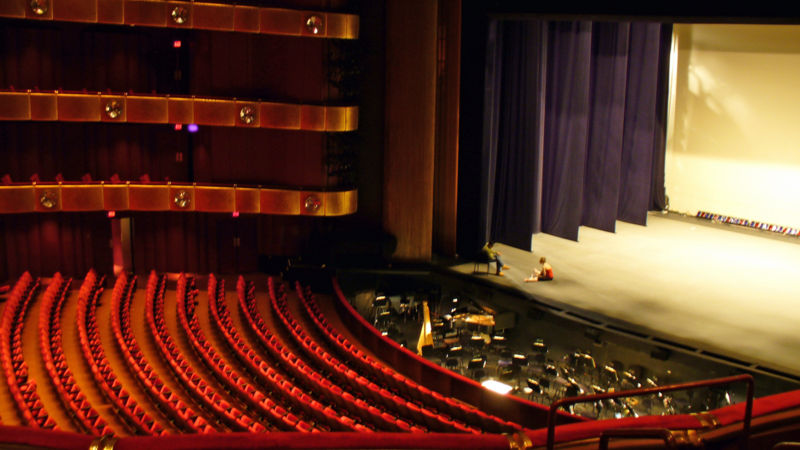
In news *not* having to do with someone's death - it seems that there are some unwanted audience members over at New York City Opera's David H. Koch Theater.

That's right - commence to itching because according to the Associate Press, BEDBUGS have been discovered in a dressing room at the theater.

Now, the theater is currently dark given that NYCO's fall season doesn't open for another couple of weeks. October 27th is the day that City Opera opens with Bernstein's A Quiet Place.

Wait ... weren't we *just* talking about Bernstein?

Spokeswoman Maggie McKeon confirmed the outbreak and according to an e-mail from the theater's managing director Mark Heiser, treatment to rid the theater of the tiny pests was under way.

The bugs have been discovered in theaters, movie theaters, clothing stores, office buildings, and various apartments throughout New York City. Be gone, bugs!

**UPDATE**

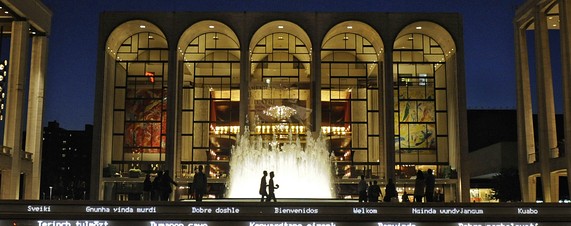
Those little buggers spread like a wildfire - The Wall Street Journal is now reporting that the little theater across the plaza - A.K.A. the Metropolitan Opera - has also found Bedbugs.

The Met was apparently prompted by the findings at the DHK Theater to conduct “a check of non-public areas of the opera house,” the Met said in a statement. “Bedbugs were discovered in some isolated locations but not in any public areas. There was no evidence of infestation. Those areas identified will be treated this afternoon.”

The opera has been monitoring the auditorium, the lobby and all other public areas since August and plans to inspect all areas of the building overnight.

Alexander Bernstein: Remembering My Father

I know with all of the Dame Joan coverage it seems that I've been going on ad nauseum about items relating to mortality ... Friendlies, I couldn't help but bring this one to you, too.

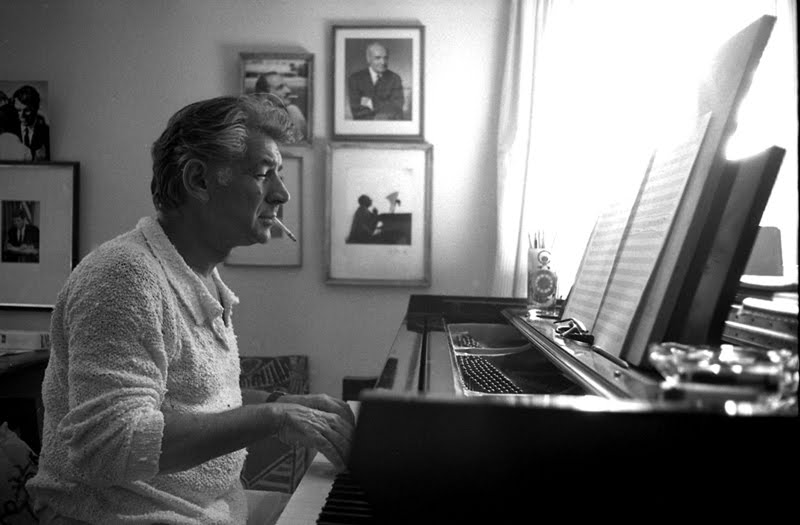
On the 20th anniversary of the death of composer, conductor, pianist, author and educator Leonard Bernstein, his son Alexander Bernstein has written an exclusive on dot429.com - which is a professional networking website for the LGBT communities and their allies.

Alexander Bernstein's article reads in part:
It seems impossible that twenty years have passed since my father (Leonard Bernstein) died. Or perhaps, I should write, I haven’t seen my father for twenty years! Sometimes I feel as though he is on tour again and will be back at any time now…

My father traveled a great deal. When he was home, though, he was really home. As a composer, he didn’t have an office to go to like the other dads. He would stay up very late working and then wake up very late. He would always be there when we came home from school, ready to play (or at least not minding if we played quietly in his studio while he worked). In the summertime we had him all day long for swimming, tennis, sailing, or just eating six ears of corn apiece. Sometimes he would play something for us as soon as he finished writing it and would ask our opinions. Undoubtedly, it was always “terrific” because he had such faith in his work and played with such joy and energy.
For more of Alexander Bernstein's article, Yours Truly *highly* encourages you to pop on over to dot429.com.

Tuesday, October 12, 2010

San Diego Opera's Ian Campbell discusses longtime colleague, Dame Joan Sutherland

A longtime colleague of Dame Joan Sutherland was San Diego Opera's General Director Ian Campbell, who I might add is a fellow Australian.

Mr. Campbell had this to say about Dame Joan's passing:
"Joan's death ends, at least for now, an era of full-voiced coloratura singing. There is no soprano today with a sound to match hers, since however talented they be, singers of her roles cannot match the sheer outpouring of sound she delivered.

It was not a matter of "loudness" or "volume" but of fullness, roundness. Joan's voice filled every corner of every opera house in which she sang with a warm, rich sound which seemed to embrace the listener.

Her pin-point coloratura, still full and rich throughout a range beyond high D, was extraordinary. How she moved such a full sound so rapidly and effortlessly defied imagination.
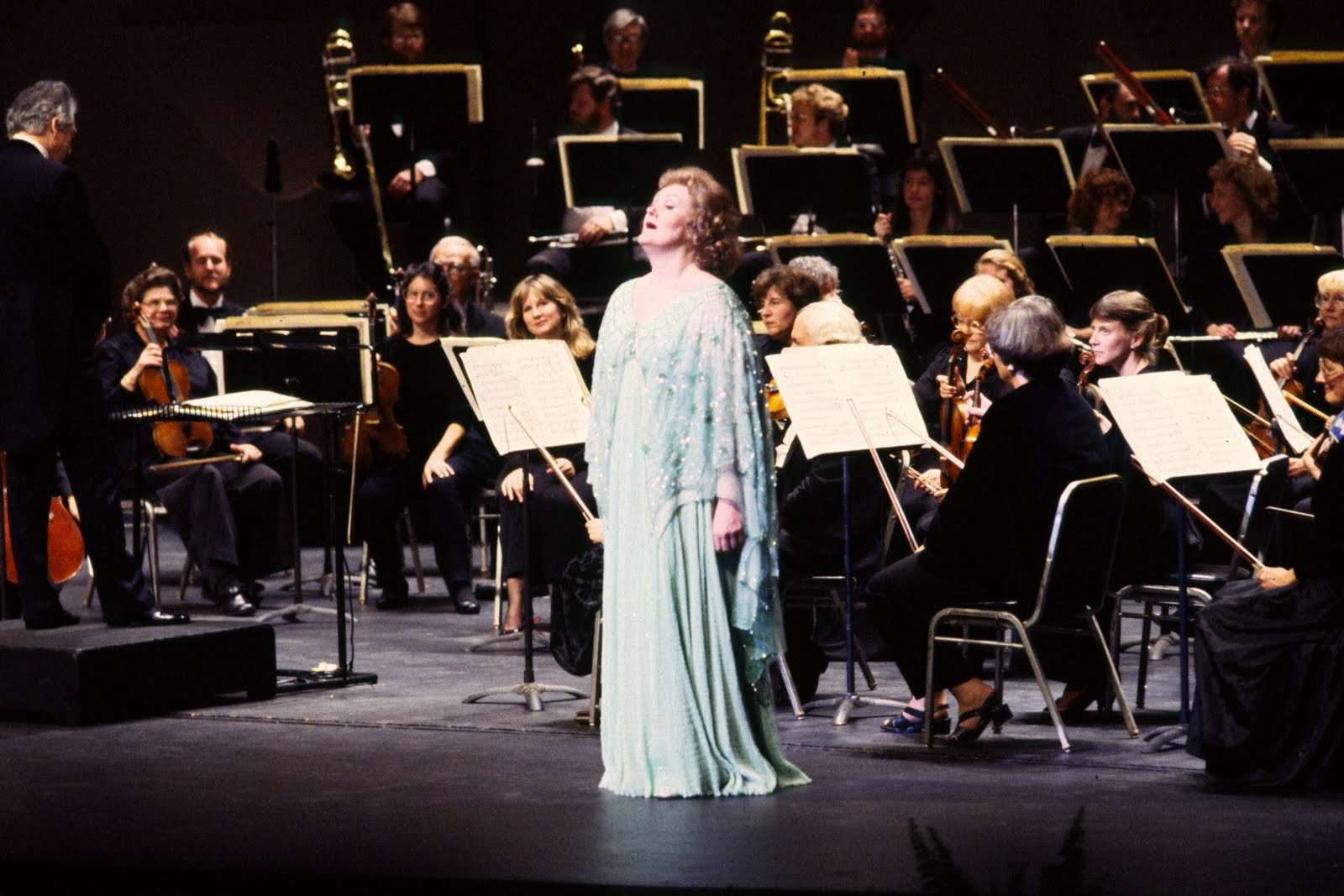
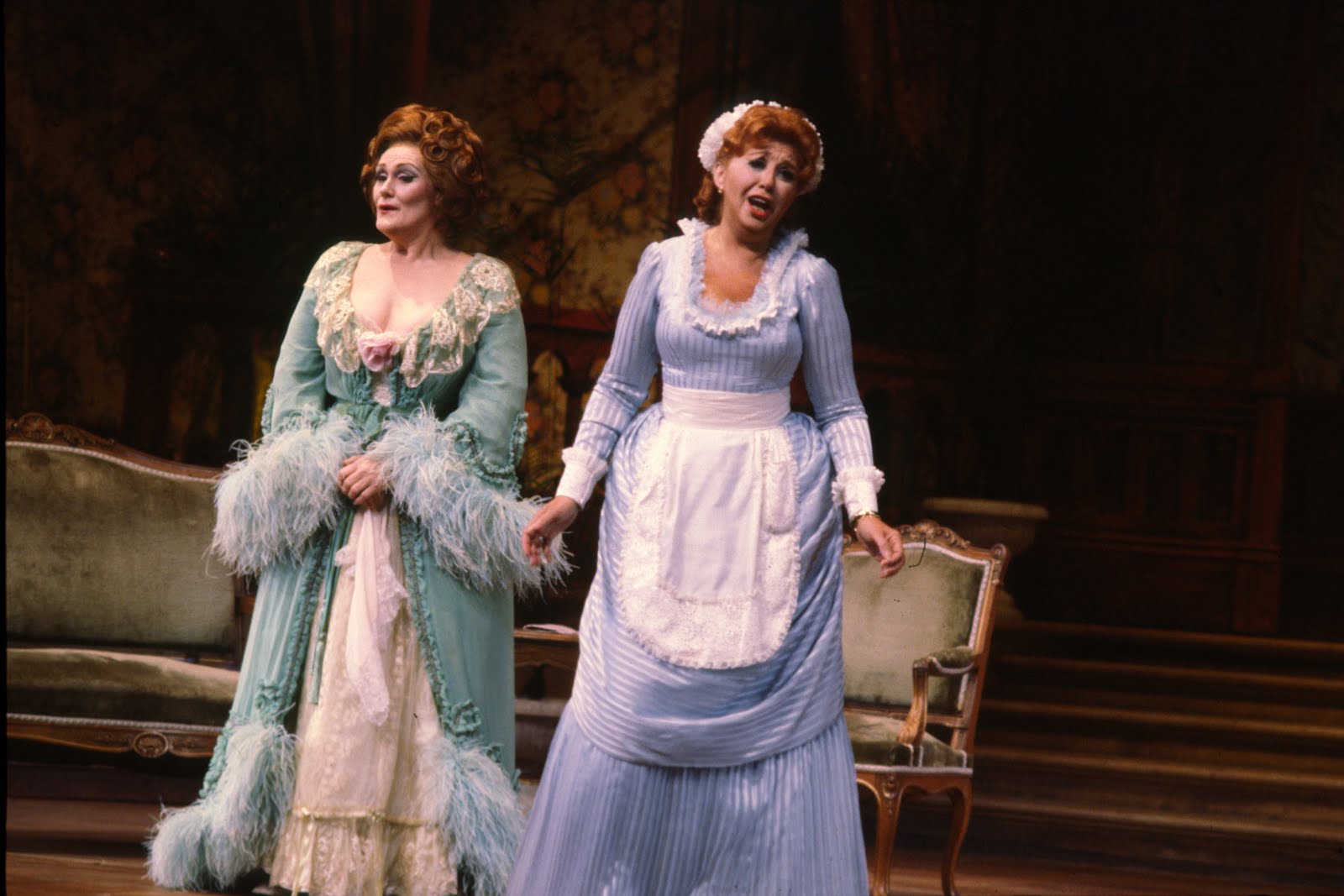
Dame Joan performed with San Diego Opera some seven times: including 4 productions - Lucia di Lammermoor (1974), Die Fledermaus (1980 - with Beverly Sills pictured here), Adriana Lecouvreur (1983) and I Masnadieri (1984) and 3 concerts.

Ian Campbell recounts the last time he saw Dame Joan:
I last saw her on June the second in London last year (2009). It was at a performance of Roberto Devereux at the Holland Park Festival. Richard was conducting and Joan and I were in the audience a few seats from one another. Everyone stood and applauded as she came in, a fitting tribute.

Joan had broken her legs in a recent fall and was struggling on two canes. She was frail. When I asked how she was managing she replied in typical style, "It's a bloody pain in the neck."

Every voice is so individual we can always say with confidence that we will never hear the like again. Joan sang in a style technique, with such a full sound, that she will be difficult to emulate.

But someone will follow in her footsteps eventually, and Joan will remain the touchstone for that technically brilliant, larger-voiced coloratura soprano whenever she does come along. "
I highly encourage you to travel over to San Diego Opera's Blog Aria Serious and read Mr. Campbell's comments in their entirety.

La Stupenda exits the stage

THE greatest soprano of her time, Joan Sutherland was blessed with formidable technique, a voice that brought her the title La Stupenda, and an unspoiled Australian nature that kept vanity and pretension at bay. The Australian - Matthew Westwood looks back at Australia's greatest opera singer:

Monday, October 11, 2010

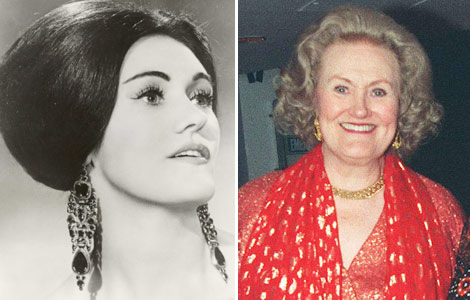
In Memoriam: Dame Joan Sutherland 1926-2010

Originally posted at 10:16 AM ET: Legendary soprano and queen of bel canto, Dame Joan Sutherland, has died.  The Sydney Morning Herald reports that Dame Joan passed away peacefully in the early hours of yesterday morning after suffering a long ilness.

One of the most recognizable female opera singers of the 20th century, she was dubbed La Stupenda by a La Fenice audience in 1960 after a performance as Alcina.

Her singing study began early with her mother and she gave her first performance at seven years old on a radio show singing The Bonnie Banks o' Loch Lomond. Singing was not an option for her as a young adult due to the financial constraints it placed on her family. After attending secretarial college, Joan's first job was at the Radiophysics Laboratory and then a firm of farm suppliers. After singing Softly Awakes My Heart from Samson and Dalilah she won a two year singing scholarship and began her study as a Dramatic Soprano.

After a quick courtship, Dame Joan married the young pianist, Richard Bonynge. Maestro Bonynge knew that Dame Joan's voice was capable of more than she understood. After tricking her into singing in her upper register, Maestro Bonynge soon convinced her that she was indeed a Coloratura Soprano best suited for the Bel Canto. Soon thereafter, she began singing the repertoire that she became known for.

In 2002, Bonynge said of his famous wife: "I always wanted her to have a career more than she did. She was never career-minded at all. But I was concerned for her career because I thought she was so fabulous ... I was never jealous of her - the better she did, the more I was happy." Indeed, the more she sang, the more he conducted because shortly after his 1962 debut in the pit, it became known that you could not have one without the other.  That is not to say that he was not a conductor of note in his own right.

Together, the two were an operatic power couple, but retired into a quiet life in Switzerland. Maestro Bonynge has continued to conduct but in recent years, Dame Joan was rarely, if at all, seen in public.  A few years ago, I had the opportunity (and sheer joy) to work with Maestro Bonynge at San Diego Opera - one night at dinner, upon asking him about Dame Joan, Maestro reported that for the Christmas holiday, he had purchased his wife a heavy duty leaf blower.  A look of shock must have been evident because he quickly explained that she was quite happy and thoroughly enjoyed walking around the grounds of their Chalet with the leaf blower strapped to her back, blowing leaves and keeping the place clean.

Can you imagine?   

Undoubtedly, Dame Joan leaves behind a legacy of masterful performances and it is safe to say that the operatic world has lost a legendary member of that elite group of previous performers that truly shaped what opera is today.

Dame Joan is survived by her husband of 56 years, Maestro Richard Bonynge - their son, Adam and two grandchildren.

Rest Peacefully, Dame Joan. Your presence will be greatly missed.

Keep traveling down for more coverage and clips of the technical marvel that was Dame Joan.

More coverage on the death of Dame Joan Sutherland

For opera lovers of a certain age, Sutherland represents an ethos that simply doesn't exist anymore. She is the epitome of a singer as gateway to catharsis, the portal to transcendence. -NPR: Remembering 'La Stupenda'

Regarded as one of the finest opera singers of the 20th Century - Dame Joan Sutherland was known for her remarkable technique, and her voice of intense warmth and startling range.

Here - following the announcement of her death at the age of 83 - look back the stage presence of La Stupenda, or The Stunning One, as she was nicknamed by the Italians.
-BBC: Audio slideshow: Dame Joan Sutherland

Joan Sutherland received acclaim, not just for her singing ability but also her warmth and down to earth manner. She would never refuse to meet her public after a performance and take time to chat and sign programmes.

Not for her the flashes of petulance which are exhibited by some of her modern counterparts. She was a consummate professional who once said that she was happy to sing the roles that she was given and obviously took great joy in doing so.
-BBC: Obituary- Dame Joan Sutherland

Nov. 22, 1966: Times music critic Martin Bernheimer interviews Joan Sutherland … in his Volkswagen? Yes, it’s true. She and Ricky (her husband, conductor Richard Bonynge) are getting ready to do “Lucia” at the new Met, which will be his debut. -Los Angeles Time: Voices – Joan Sutherland, 1926 – 2010

Over a career that spanned more than 40 years, with fully 75 opera roles in her well-traveled repertoire, Joan Sutherland is being remembered as one of the last singers who truly earned the title prima donna...

...Sutherland, or "La Stupenda" -- as the Italian press dubbed her -- had many qualities: a tall, sensible and hard-working Australian who toured tirelessly; a singer with a healthy ego that was always tempered by self-deprecating humor; a voice that had a beautiful, clear quality in the high register, but which could negotiate rapid ornamentation in any register with ease.
-WQXR: Music World Pays Tribute to Famed Soprano Joan Sutherland

Another Favorite Clip - Dame Joan Sutherland 1926-2010

In honor of the passing of Dame Joan Sutherland, I have brought together some wonderful clips of this technical marvel at work.


Thursday, October 7, 2010

Charlotte Church - the Voice of a Smoker

Oh yes indeed, Chicklets ... Charlotte Church [R.] has revealed that she is considering a return to opera.

The 24-year-old "singer" and songwriter is about to release her second pop album. You'll remember that she originally made a name for herself not as a pop singer, but as the "Voice of an Angel" after singing Pie Jesu on a TV talent show at age 11.

Wait ... does that *really* mean that she's been working in the music business for 13 years? Time flies - which is more than I can say for her CDs.

Anyway, as I said, La Church fancies a return to opera. She tells the Daily Telegraph that she would like to retrain for classical singing, if she can give up smoking - "I'd love to do an opera some time. I still sing in that classical voice, at home on my own, in the dark!

Let's be honest: there are just some things that are better carried out at home, in the dark.

Tuesday, October 5, 2010

This tenor refuses to be defeated

Giuseppe Filianoti
photo by E. Paiz
A truly inspiring story - In the Met's Tales of Hoffmann, 36-year-old Giuseppe Filianoti [R.]plays a poet defeated by life. The singer's brush with tragedy off the stage had a far happier ending.
The Italian tenor seemed poised for a major career after winning raves for his 2005 Met debut in Lucia di Lammermoor. But a year later, fresh off a rehearsal for a concert at Carnegie Hall, he received a call from his doctor with chilling news: A recent checkup revealed cancer cells in his thyroid gland.
Read more of James Jorden's conversation with Filianoti at the New York Post.

**Update 10/10/2010**

During Google research for this post, I found a picture of someone who reportedly was Mr. Filianoti.  I found out this evening from Mr. Filianoti's management that the picture was incorrect.  I sincerely apologize for the mix-up.
Related Posts Plugin for WordPress, Blogger...